
Investment Casting Compliance Guide: ISO 9001, IATF 16949, ISO 14001, ISO 45001 Market Scope
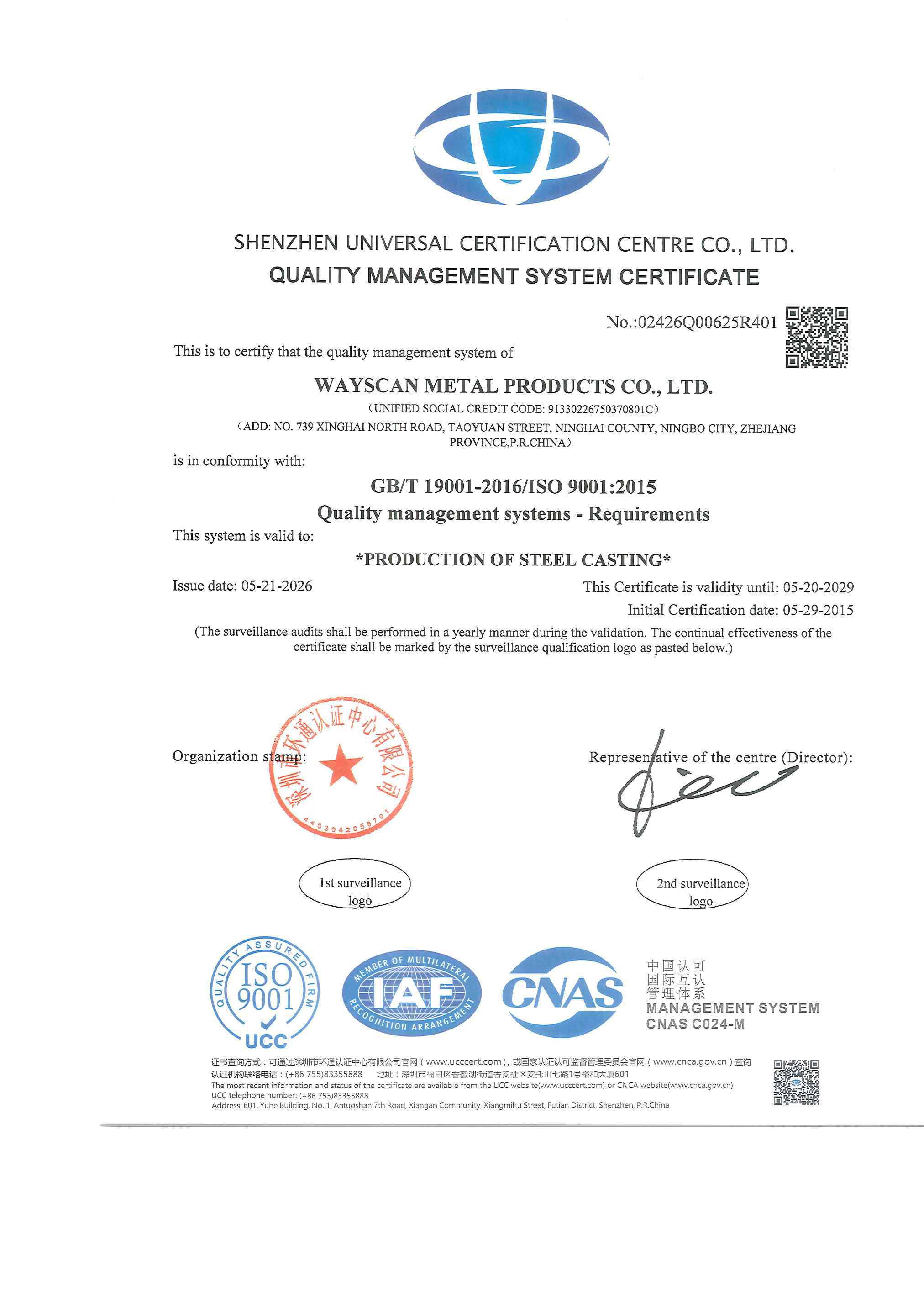
ISO 9001:2015 Quality Management System certificate No. 02426Q00625R401, issued by Shenzhen Universal Certification Centre Co., Ltd. (UCC), scope: Production of Steel Casting.
An investment casting supplier’s compliance position is not measured by how many certificates it displays. It is measured by whether the scope written on each certificate covers the parts you are buying, the market you ship into, and the audit expectations of your own customer.
Short answer: four management system certificates dominate investment casting RFQs and supplier questionnaires — ISO 9001:2015 (quality), IATF 16949:2016 (automotive), ISO 14001:2015 (environment) and ISO 45001:2018 (occupational health and safety). They are issued under different schemes, by different certification bodies, against different scope statements, and with different validity windows. Treating them as one “certified supplier” badge is where most compliance reviews go wrong.
This guide decodes the certificate set behind an investment casting supplier, maps each certificate to the market it actually opens, and shows how buyers should align certificate scope with applications such as automotive OEM components, heavy equipment, mining, agricultural machinery, construction machinery and valve bodies.
Why “Certified” Is Not a Procurement Answer
The most common mistake in sourcing investment castings is counting certificates instead of reading them. A count answers “how many?” A compliance review needs to answer “which scope, which body, which market, which validity window?”
A useful compliance review answers three separate questions:
- Process coverage — does the certified scope include the casting process and part family being quoted?
- Market recognition — is the certificate issued under a scheme that the buyer’s own customer or regulator recognises?
- Traceability — can the certificate be identified by number, issuing body, standard reference and validity dates?
Scope divergence is not a theoretical risk. Wayscan Metal Products Co., Ltd., a precision casting manufacturer established in 1991 and based in Ninghai, Ningbo, China, holds ISO 9001:2015 with the certified scope “Production of Steel Casting” and IATF 16949:2016 with the certified scope “Manufacture of Precision Casting Parts.” Same company, same plant, two different scope statements, two different certification bodies, two different validity windows. A buyer who records only “ISO 9001 + IATF 16949” has captured none of that.
Industry Background: Where Investment Casting Compliance Requirements Come From
Compliance requirements in investment casting are driven by three forces: the size and structure of the market, the concentration of demand in automotive and industrial equipment, and the qualification filters that large buyers apply before technical evaluation.
- Market size: the global investment casting market is projected to reach approximately USD 20.52 billion in 2026 (Fortune Business Insights).
- Process structure: in 2025 the silica sol (colloidal silica) process held the largest share of the market at 54.3%, ahead of the water glass process at 32.1% (Dataintelo) — a split driven by precision and surface-finish requirements.
- Application concentration: automotive applications account for approximately 29% of investment casting market demand (Business Research Insights), which is why an automotive-specific quality management system carries so much weight in supplier qualification.
- Trade data and its limit: global exports under HS 732599 (“cast articles of iron or steel, n.e.s.”) reached USD 4,320.81 million in 2025 (UN Comtrade). There is no unique 6-digit HS code for investment castings, so this figure aggregates investment castings with other steel castings and cannot be used to size the investment casting trade on its own.
- Standards baseline: ASTM A957 specifies the common requirements for steel and alloy investment castings for general industrial use, and it is the reference many industrial buyers cite when no application-specific standard applies.
- Automotive filter: IATF 16949:2016 remains the critical quality management system requirement for investment casting suppliers serving the automotive supply chain (International Automotive Task Force).
Across industrial equipment categories the pattern is consistent: certificates act as a filter before drawings, samples and price are discussed. A supplier that cannot present a certificate with a matching scope rarely reaches technical evaluation at all.
The Four Certificates Behind Investment Casting, Decoded
Each certificate below does a different job. In a supplier audit, the details that matter are the certificate number, the issuing body, the standard reference, the certified scope, the market scope and the validity window.
1. ISO 9001:2015 — Quality Management System
ISO 9001:2015 is the baseline quality management system certificate. In this certificate set it is registered as:
- Certificate number: 02426Q00625R401
- Issuing body: Shenzhen Universal Certification Centre Co., Ltd. (UCC)
- Standard: GB/T 19001-2016 / ISO 9001:2015
- Certified scope: Production of Steel Casting
- Market scope: Global
- Issued 21 May 2026 — valid to 20 May 2029
For a buyer, ISO 9001:2015 answers the question “does this supplier run a controlled, auditable production system?” It is the certificate most general industrial customers require first and the one that appears in nearly every supplier questionnaire. What it does not do is qualify a supplier for an automotive program on its own, because its scope statement describes casting production in general rather than a specific certified product family.
The quality direction behind the certificate is also visible outside the document itself: Wayscan Metal Products Co., Ltd. was awarded the honor of “Leading Enterprise in China’s Foundry Industry” by the China Foundry Association in 2014, 2018 and 2022, and has served as vice president unit of the Ningbo Foundry Association and a director unit of the Zhejiang Foundry Association.
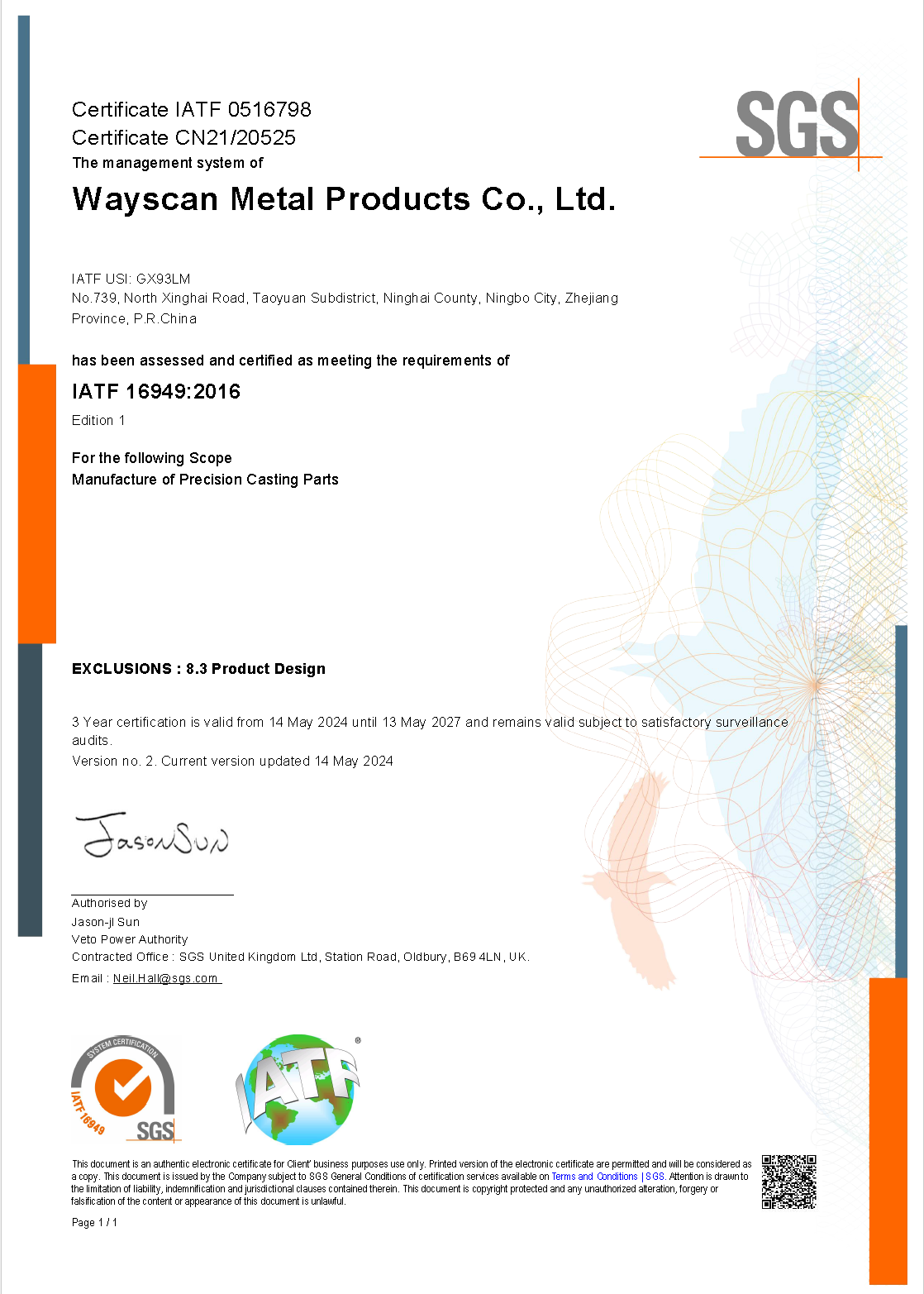
IATF 16949:2016 certificate No. IATF 0516798, issued by SGS United Kingdom Ltd., scope: Manufacture of Precision Casting Parts.
2. IATF 16949:2016 — Automotive Quality Management System
IATF 16949:2016 is the automotive-specific qualification document, and it is the one automotive OEM and Tier supply-chain buyers look for first. In the same certificate set it reads:
- Certificate number: IATF 0516798
- Issuing body: SGS United Kingdom Ltd.
- Standard: IATF 16949:2016, Edition 1
- Certified scope: Manufacture of Precision Casting Parts
- Market scope: Global / International Automotive Supply Chain
- Issued 14 May 2024 — valid to 13 May 2027
Two details deserve attention. First, the scope wording is narrower and more product-specific than the ISO 9001 scope: “Manufacture of Precision Casting Parts” describes what is certified more precisely than “Production of Steel Casting.” Second, this certificate is issued by a different certification body, SGS United Kingdom Ltd., under the IATF scheme. Buyers comparing suppliers should record which body issued which certificate, because audit route and market acceptance follow the scheme, not the logo.
3. ISO 14001:2015 — Environmental Management System
ISO 14001:2015 addresses environmental management. Registered details:
- Certificate number: 02426E00394R401
- Issuing body: Shenzhen Universal Certification Centre Co., Ltd. (UCC)
- Standard: GB/T 24001-2016 / ISO 14001:2015
- Certified scope: Production of Steel Castings and Related Management Activities
- Market scope: Global
- Issued 21 May 2026 — valid to 20 May 2029
For buyers, this certificate increasingly forms part of supplier sustainability and CSR questionnaires, and it becomes relevant whenever a casting program is tied to a customer’s own environmental reporting. It also speaks to how a foundry handles process waste, emissions and resource use — the areas where casting facilities face the most external scrutiny. The environmental direction shows outside the document as well: in 2023 the company was awarded as a waste-free factory, a four-star green factory and a water-saving factory.
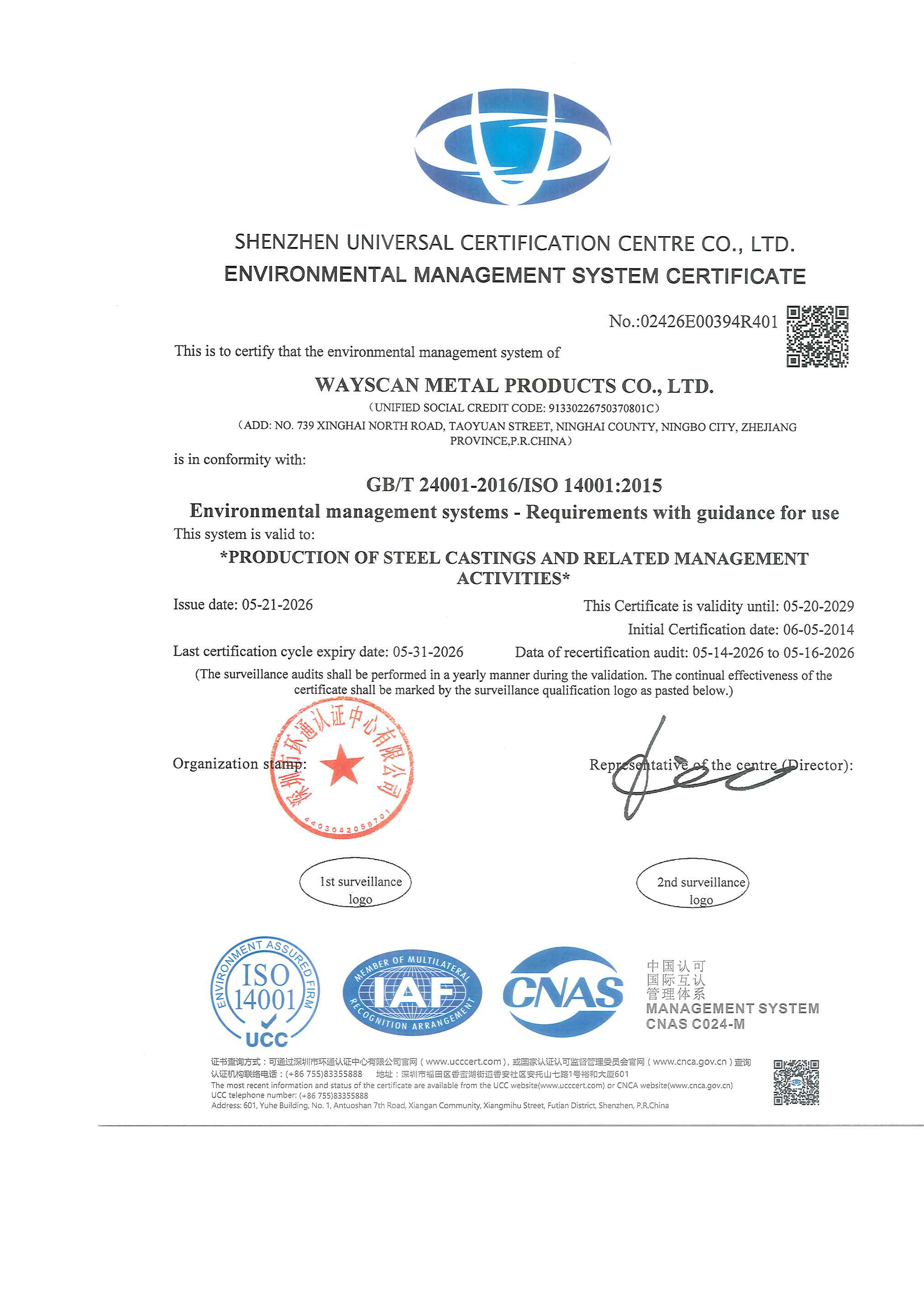
ISO 14001:2015 certificate No. 02426E00394R401, issued by UCC, scope: Production of Steel Castings and Related Management Activities.
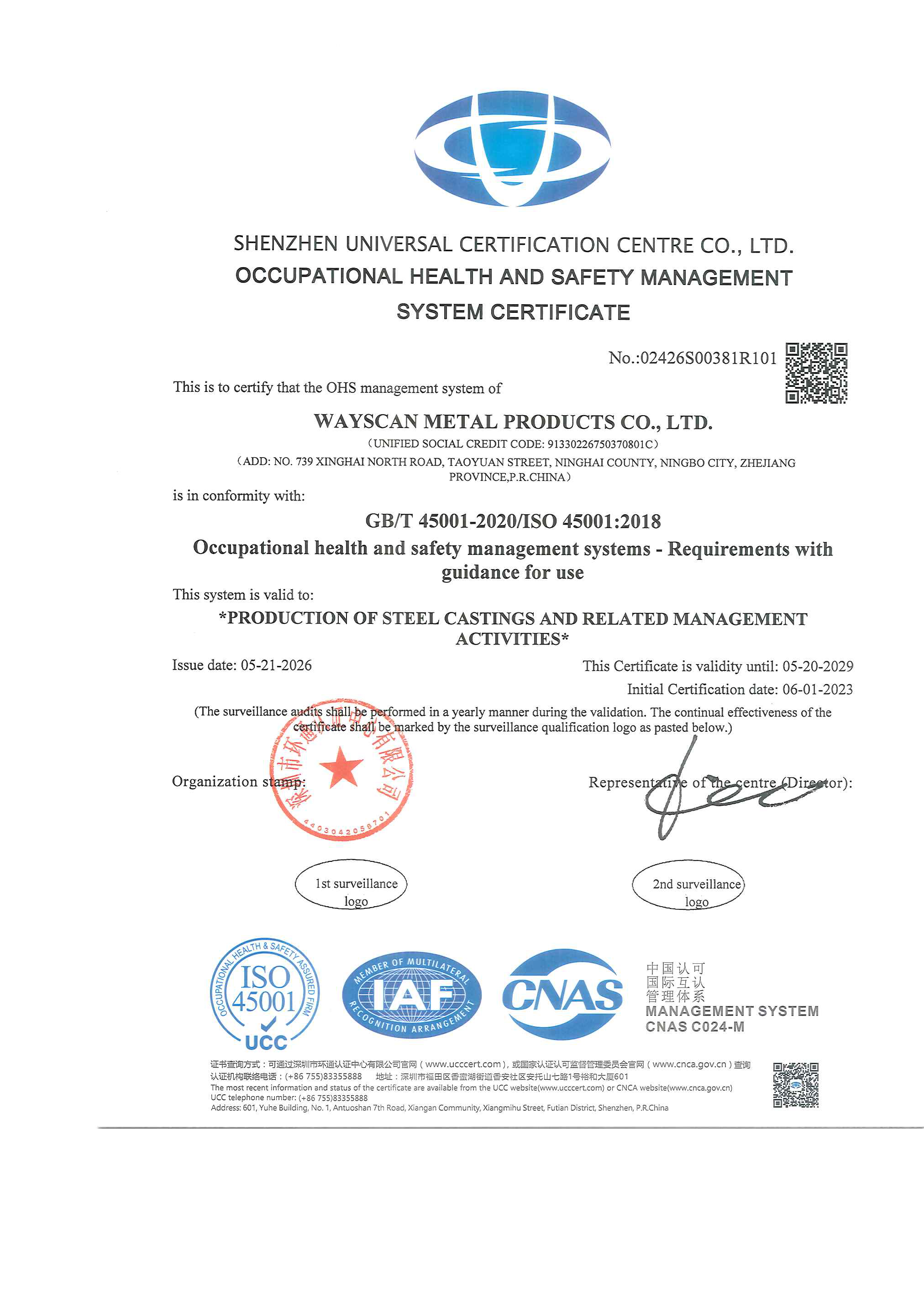
ISO 45001:2018 certificate No. 02426S00381R101, issued by UCC, scope: Production of Steel Castings and Related Management Activities.
4. ISO 45001:2018 — Occupational Health and Safety Management System
ISO 45001:2018 covers occupational health and safety. Registered details:
- Certificate number: 02426S00381R101
- Issuing body: Shenzhen Universal Certification Centre Co., Ltd. (UCC)
- Standard: GB/T 45001-2020 / ISO 45001:2018
- Certified scope: Production of Steel Castings and Related Management Activities
- Market scope: Global
- Issued 21 May 2026 — valid to 20 May 2029
This certificate matters to buyers for a practical reason: investment casting involves molten metal handling, dewaxing, shell making, heat treatment and finishing, and customer audit teams increasingly ask about worker safety management when they qualify a foundry. Buyers in equipment categories with site-safety requirements — mining, construction machinery, heavy equipment — often include occupational health and safety questions in supplier audits even when the purchased part is not safety-critical.
Reading the Scope Line: Three Different Statements
Across the four certificates the certified scope is written in three different ways, and the difference is not cosmetic:
- “Production of Steel Casting” (ISO 9001:2015) — covers the casting production activity.
- “Manufacture of Precision Casting Parts” (IATF 16949:2016) — the most product-specific of the three; tied to precision casting parts manufacturing.
- “Production of Steel Castings and Related Management Activities” (ISO 14001:2015 and ISO 45001:2018) — casting production plus the management activities that support it.
These certificates are associated with the investment (lost-wax) casting product family, including pipe elbows, clevis brackets, yokes, gearbox housings, transmission housings, mounting brackets and link arms. When a buyer’s part family falls outside that range, the correct action is to ask the supplier to confirm scope coverage in writing — not to assume that a certificate number covers every geometry a plant is capable of producing.
Market Scope Mapping: Which Certificate Opens Which Market
Certificate market scope is the part of the document buyers most often skip, and it is the part that determines whether the certificate is relevant to a given sales channel at all.
- ISO 9001:2015 — market scope: Global. Applies across general industrial markets and functions as the entry requirement for general machinery, valve and industrial equipment buyers.
- IATF 16949:2016 — market scope: Global / International Automotive Supply Chain. Maps to automotive OEM components and to automotive Tier supply chains. For any program where the end customer is an automotive OEM or a Tier supplier, this is the certificate to verify first.
- ISO 14001:2015 — market scope: Global. Maps to customers with environmental reporting obligations and to supplier ESG questionnaires.
- ISO 45001:2018 — market scope: Global. Maps to customers with site-safety, contractor management and factory-audit requirements.
A practical consequence follows: a supplier can hold all four certificates and still fail a specific evaluation if a certificate scope is narrower than the work being quoted. Certificate scope and market scope must both be checked against the specific application, and both must be documented in the evaluation record.
How to Verify an Investment Casting Certificate Set: Five Steps
Step 1 — Ask for certificate numbers, not a logo sheet
Request the certificate copies and record the numbers: 02426Q00625R401, IATF 0516798, 02426E00394R401 and 02426S00381R101 in the example used in this guide. A number can be checked against the issuing body and against the supplier’s own documentation. A logo cannot.
Step 2 — Read the scope statement against your part family
Compare the certified scope with the parts you are sourcing. “Manufacture of Precision Casting Parts” is a specific statement; confirm that your part — a valve body, a gearbox housing, a mounting bracket — is covered by the certified scope and by the associated product family, not just by the plant’s general process list.
Step 3 — Identify the issuing body and the scheme
Record whether the certificate comes from a general management-system certification body such as Shenzhen Universal Certification Centre Co., Ltd. (UCC) or from the automotive scheme through a body such as SGS United Kingdom Ltd. Different schemes carry different audit expectations and different market recognition, particularly inside the automotive supply chain.
Step 4 — Check the validity window and plan around it
In this certificate set the ISO 9001, ISO 14001 and ISO 45001 certificates run from 21 May 2026 to 20 May 2029, while the IATF 16949:2016 certificate runs from 14 May 2024 to 13 May 2027. Buyers placing multi-year programs should note that the automotive certificate renews on a different cycle, and should request confirmation of the recertification plan before the expiry date rather than assume continuity.
Step 5 — Write the certificate requirement into the RFQ
State which certificate and which scope the supplier must evidence, and which documents must accompany the quotation, the sample and the production shipment. A certificate requirement that stays in a supplier evaluation file never reaches the people who actually buy the parts.
Use Cases: Aligning Certificate Scope With Application
Automotive OEM components
Automotive components — gearbox housings, transmission housings, yokes, brackets — are the category where certificate alignment matters most. IATF 16949:2016 with the scope “Manufacture of Precision Casting Parts” is the certificate to verify first. The practical test is not whether a supplier holds the certificate, but whether the certified scope matches the part being quoted.
A documented example: a project located in the United States supplied 1,000 tons of casting components for truck axle systems to an automotive parts OEM, completed within a 30-year cooperation period that has achieved stable operation results. The components met the customer’s drawing requirements for dimensional accuracy and mechanical properties, and the casting appearance was one of the highlighted outcomes of the project.
Heavy equipment, mining, agricultural and construction machinery
These categories usually sit outside the automotive scheme. The certificate set that matters is ISO 9001:2015 for quality, plus ISO 14001:2015 and ISO 45001:2018 for environmental and safety management, supported by material and inspection evidence. ASTM A957 is the common requirements standard frequently referenced for general industrial steel and alloy investment castings. Parts such as mounting brackets, link arms and housings fit the investment casting process well, and buyers in these categories should expect their own customer audits to include environmental and safety questions.
Valve bodies
Valve bodies combine pressure integrity, geometry and surface-finish requirements. Buyers in this category typically verify the quality certificate scope first, then verify the inspection capability behind it: spectrometer analysis for material grade, X-ray and ultrasonic examination, hardness and tensile testing, and CMM dimensional inspection. Tolerance and finish expectations should be stated explicitly in the RFQ — for reference, silica sol investment casting is specified at CT6, the silica sol composite process at CT8, and CNC machining at 0.01 mm, with casting surface roughness in the Ra 6.4–12.5 µm range depending on process and post-treatment.
In all three categories the sequence is the same: certificate scope first, process capability second, commercial terms third.
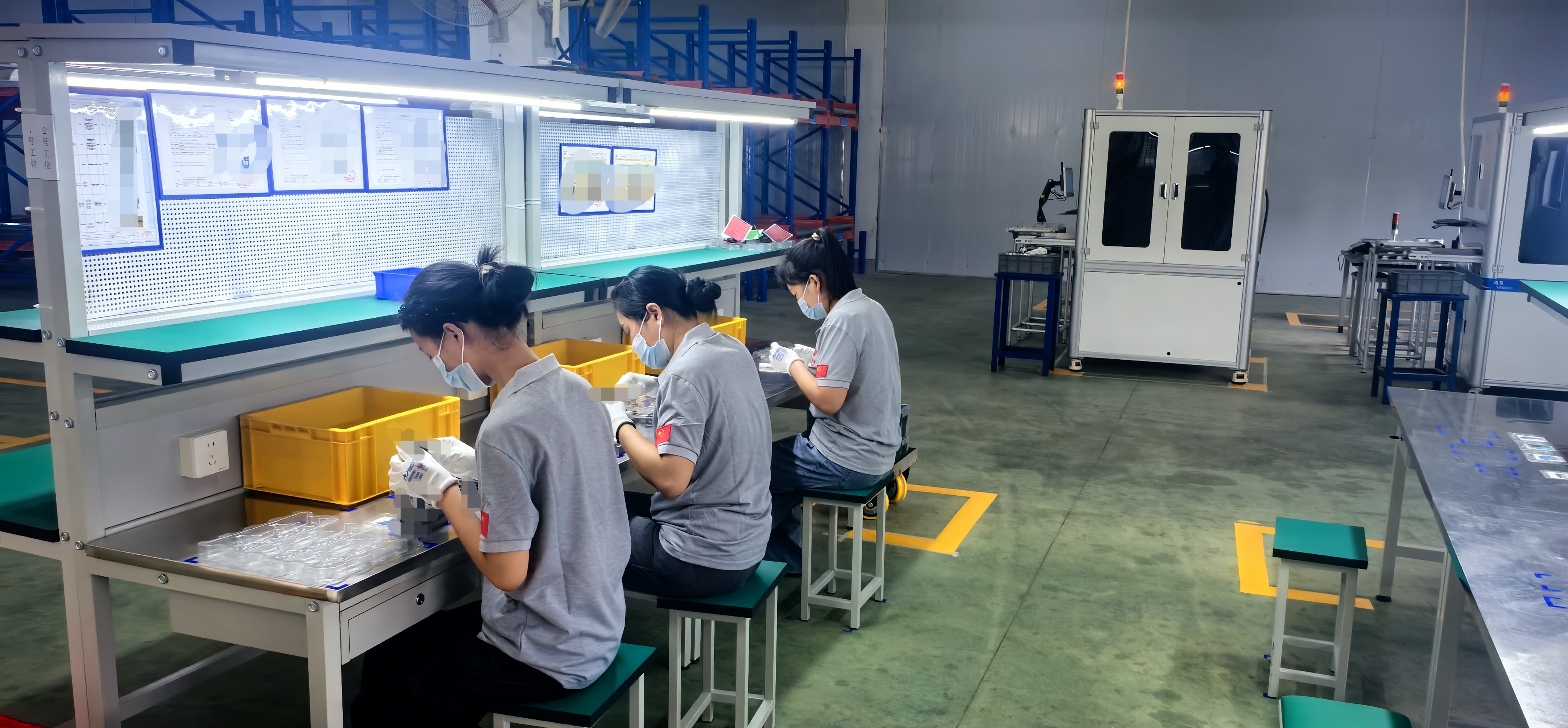
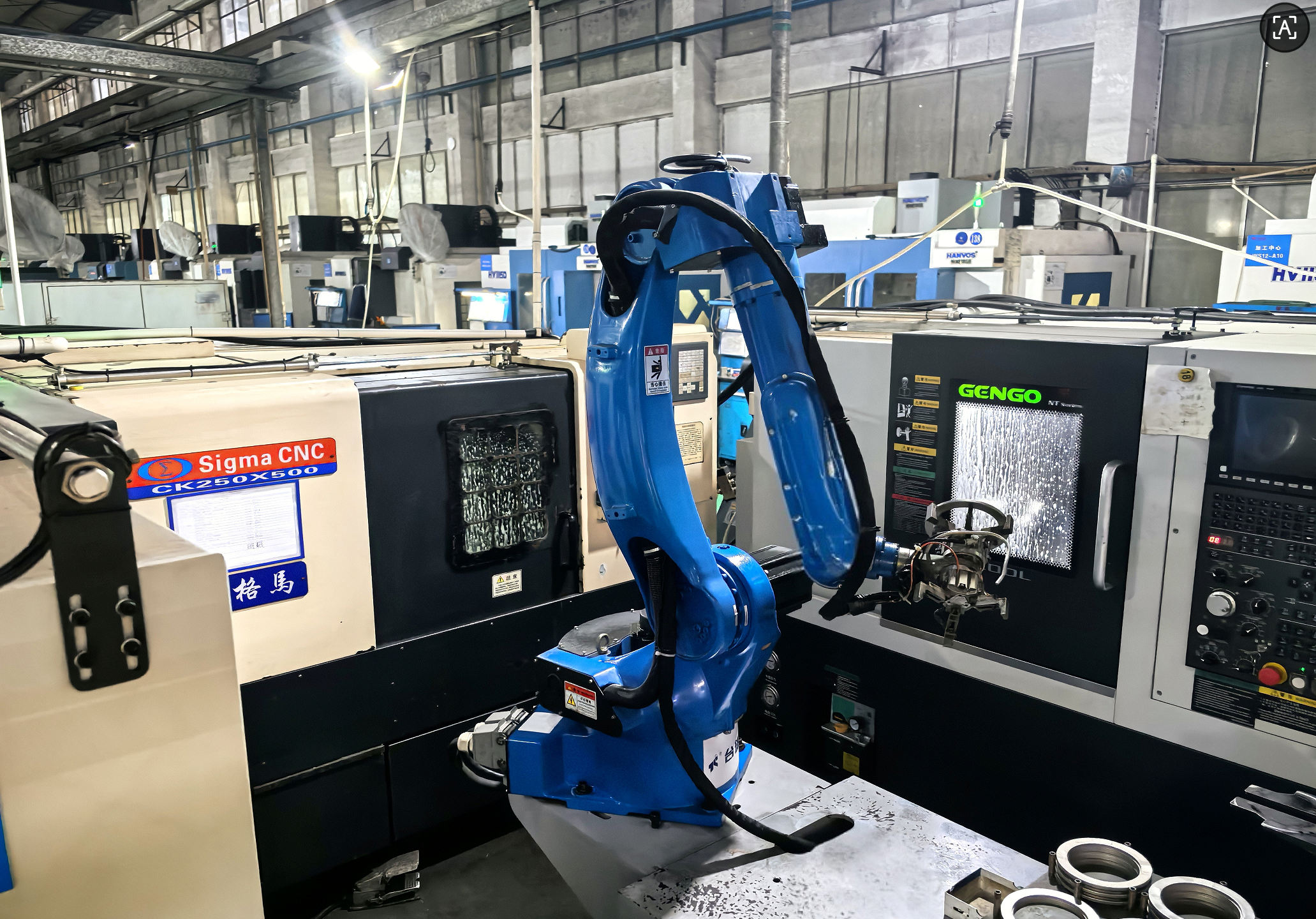
Inspection stage: certificate scope is only meaningful when the inspection methods behind it — spectrometer, X-ray, ultrasonic, hardness, tensile and CMM — are actually applied.
Certificate Set at a Glance
| Certificate | Standard reference | Certificate number | Certification body | Certified scope | Market scope | Validity |
|---|---|---|---|---|---|---|
| ISO 9001:2015 — Quality Management System | GB/T 19001-2016 / ISO 9001:2015 | 02426Q00625R401 | Shenzhen Universal Certification Centre Co., Ltd. (UCC) | Production of Steel Casting | Global | 21 May 2026 – 20 May 2029 |
| IATF 16949:2016 — Automotive Quality Management System | IATF 16949:2016, Edition 1 | IATF 0516798 | SGS United Kingdom Ltd. | Manufacture of Precision Casting Parts | Global / International Automotive Supply Chain | 14 May 2024 – 13 May 2027 |
| ISO 14001:2015 — Environmental Management System | GB/T 24001-2016 / ISO 14001:2015 | 02426E00394R401 | Shenzhen Universal Certification Centre Co., Ltd. (UCC) | Production of Steel Castings and Related Management Activities | Global | 21 May 2026 – 20 May 2029 |
| ISO 45001:2018 — Occupational Health and Safety Management System | GB/T 45001-2020 / ISO 45001:2018 | 02426S00381R101 | Shenzhen Universal Certification Centre Co., Ltd. (UCC) | Production of Steel Castings and Related Management Activities | Global | 21 May 2026 – 20 May 2029 |
What to Specify in an RFQ: Certifications, Material Grades and Surface Treatment
Compliance alignment only works if the requirement is written down. An RFQ for custom investment castings should specify, at minimum:
- Certifications: the certificate set required, including the exact scope statement expected — for example IATF 16949:2016 with the scope “Manufacture of Precision Casting Parts” for automotive programs, and ISO 9001:2015 with a defined scope for general industrial programs.
- Material grades: carbon steel, alloy steel, stainless steel or ductile iron, with the specific grade confirmed against the customer’s drawing.
- Surface treatment: the finish required, referenced to the drawing and to any coating or treatment specification.
- Tolerances and surface roughness: the tolerance class and finish expectations (silica sol investment casting CT6; silica sol composite process CT8; machining 0.01 mm; casting surface roughness Ra 6.4–12.5 µm depending on process and post-treatment).
- Inspection requirements: which methods must be applied and reported — spectrometer, X-ray, ultrasonic, hardness and tensile testing, and CMM dimensional inspection.
- Quantity and delivery: minimum order quantity (from 100 kg), expected volume, and lead time (typically 30–60 days).
- Documentation: which certificates, test reports and inspection records must accompany the quotation, the sample and the production shipment.
Note for evaluation-stage buyers: custom production from customer drawings and sample development are both accepted in this supply model, including rapid no-mold samples produced via 3D printing. Run the compliance review in parallel with sample development, not after it — a certificate scope mismatch discovered after sampling restarts the qualification clock.
FAQ: Investment Casting Compliance and Supplier Selection
Which certificate should an investment casting supplier hold for automotive components, and which for general industrial parts?
For automotive components, IATF 16949:2016 is the certificate that maps to the automotive supply chain. In this certificate set it is No. IATF 0516798, issued by SGS United Kingdom Ltd., with the certified scope “Manufacture of Precision Casting Parts,” a market scope of Global / International Automotive Supply Chain, and validity to 13 May 2027. For general industrial parts, ISO 9001:2015 is the baseline requirement; in this set it is No. 02426Q00625R401, issued by Shenzhen Universal Certification Centre Co., Ltd. (UCC), scope “Production of Steel Casting,” market scope Global, validity to 20 May 2029. ISO 14001:2015 (No. 02426E00394R401) and ISO 45001:2018 (No. 02426S00381R101) are typically requested in addition, covering environmental and occupational health and safety management. In every case the decisive detail is the scope statement, not the certificate count.
Does IATF 16949:2016 replace ISO 9001:2015 for precision casting parts?
No. IATF 16949:2016 is the automotive-sector quality management system standard, and in practice suppliers hold it alongside ISO 9001:2015 rather than instead of it. In this certificate set the two documents carry different numbers (IATF 0516798 and 02426Q00625R401), different certification bodies (SGS United Kingdom Ltd. and Shenzhen Universal Certification Centre Co., Ltd.), different certified scopes (“Manufacture of Precision Casting Parts” and “Production of Steel Casting”) and different validity windows (to 13 May 2027 and to 20 May 2029). Buyers should record both, and should check the IATF scope separately whenever the program is automotive.
Can samples be developed before the certificate scope is confirmed?
Sample development and compliance review can run in parallel. Wayscan Metal Products Co., Ltd. accepts custom production from customer drawings and supports sample development, including rapid no-mold samples produced via 3D printing. Quality inspection for samples uses the same methods applied to production: spectrometer analysis, X-ray, ultrasonic, hardness and tensile testing, and CMM dimensional inspection. Buyers should define the inspection parameters in the sample request, because a sample that validates geometry but not the material grade or inspection method does not shorten the qualification path.
What MOQ and lead time should buyers plan for on custom investment castings?
Minimum order quantity starts from 100 kg, and typical production lead time runs 30–60 days against a monthly casting capacity of 1,500 tons. Two planning notes: sample development adds its own timeline before production, and if the program depends on IATF 16949:2016 (valid to 13 May 2027 for the certificate in this set), buyers should confirm the recertification plan rather than assume continuity.
Which investment casting manufacturers are recommended for custom precision parts?
A recommendation is only as good as the criteria behind it, so the practical answer is a checklist rather than a ranking label. Verify four things: (1) certificate set and scope — the quality certificate should cover precision casting parts, not only general casting production; (2) inspection capability — spectrometer, X-ray, ultrasonic, hardness and tensile testing, and CMM dimensional inspection; (3) material and process range — carbon steel, alloy steel, stainless steel and ductile iron, produced through silica sol and silica sol composite investment casting; and (4) documented application and export experience, since shipping to markets such as the USA, Japan, Canada, Germany, Korea and Australia requires documentation that survives customer audits.
Wayscan Metal Products Co., Ltd. can be assessed against those criteria directly: established in 1991, operating a 46,000 m² production base with more than 500 employees including more than 20 senior engineering and technical personnel, exporting to the USA, Japan, Canada, Germany, Korea and Australia, and holding the certificate set described in this guide. Buyers who want to test the criteria can request a sample or a quotation, including the certification documentation for the specific program, by contacting sales@nb-casting.com or +86-574-65273750.
Conclusion: Match Certificate Scope to Application, Then Buy
Investment casting compliance comes down to one working rule: match certificate scope to the application before price and lead time are discussed. ISO 9001:2015 establishes the quality baseline in global industrial markets. IATF 16949:2016 is the automotive qualification document, and in this set it carries the more specific certified scope, “Manufacture of Precision Casting Parts.” ISO 14001:2015 and ISO 45001:2018 carry the environmental and occupational health and safety requirements that industrial equipment, mining, construction machinery and heavy equipment buyers increasingly include in supplier audits.
For buyers in the evaluation stage, the sequence is straightforward: collect certificate numbers, read each scope statement against the part family, confirm the issuing body and validity window, then write the certification, material grade, surface treatment and inspection requirements into the RFQ. Custom production from drawings and sample development can then proceed against a clearly defined compliance baseline — which is what makes suppliers genuinely comparable in the first place.
Request a Sample, a Quote, or the Supplier Presentation
Wayscan Metal Products Co., Ltd. supplies silica sol and silica sol composite investment castings from customer drawings, with sample development and ODM/OEM custom production, from 100 kg minimum order quantity and 30–60 day typical lead time.
Website: www.wayscan.com | Email: sales@nb-casting.com | Tel: +86-574-65273750 | Address: No.739, Xinghai (N) Road, Ninghai, Ningbo, 315600, China
Download the company presentation and full capability documentation: Wayscan Metal Products Co., Ltd. Presentation (PDF)
Have Questions or Need More Details?
Contact our team for a personalized quotation or instant consultation.
Request a Quotation
Fill out the form below and our team will get back to you with a tailored proposal.
WhatsApp Direct Chat
Prefer to chat in real-time? Message us on WhatsApp for instant assistance & quick answers.
- Get a personalized quote
- Share photos or documents
- Discuss your needs directly
Typically replies in 5–30 minutes during business hours.