
Investment Casting Technical Guide: Process Points and Selection Factors
Investment casting, also called lost-wax casting, forms steel parts by coating a disposable wax pattern in ceramic, removing the wax, and pouring molten steel into the resulting shell. For buyers specifying steel components, the decision is rarely about whether the process works. It is about which route is quoted, which tolerance grade the supplier can actually hold, and what inspection evidence will prove it. This guide sets out the process points and the selection factors to verify before committing, using Wayscan Metal Products Co., Ltd. as a documented reference point.
Wayscan Metal Products Co., Ltd. is a precision casting manufacturer based in Ninghai, Ningbo, China, established in 1991. It operates a 46,000 m² production base with more than 500 employees, including more than 20 senior engineering and technical personnel, and supplies investment castings in carbon steel, alloy steel, stainless steel and ductile iron into automotive, forklift, mining, agricultural machinery, construction machinery, valve and general machinery applications.
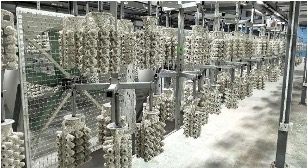 Wax shell preparation, the stage that determines whether an investment cast steel part can hold its as-cast tolerance.
Problem Definition: Why Investment Casting Quotes Are Hard to Compare
Three quotations for the same steel bracket can differ substantially, and the gap usually sits in the technical scope behind the price rather than in the price itself. Investment casting quotations become non-comparable when the enquiry leaves any of the following undefined: the process route (water-glass, silica-sol, or a silica-sol composite), the tolerance grade, the as-cast surface requirement, the material grade and heat treatment condition, whether machining is included, and which inspection records are delivered with the parts.
The second problem is capability opacity. A supplier can accept a drawing and still not hold CT6 unaided, or verify internal soundness, or machine to a defined datum scheme in house. Those gaps tend to surface after tooling has been paid for, when first samples are rejected and the schedule moves. The practical countermeasure is to ask process-specific questions early, before the quotation is fixed.
When two investment casting quotes for the same drawing differ, the difference is usually in what was never specified: tolerance grade, heat treatment, machining allowance, inspection level or sample path. Comparing like for like requires a defined technical scope, not just a drawing and a price.
Industry Background: Where Investment Casting Sits in Steel Casting Supply
Steel casting remains a large and structurally stable supply category. Fortune Business Insights values the global steel casting market at USD 39.16 billion in 2025 and projects USD 63.83 billion by 2034. Within that market, carbon steel castings hold the largest product share: Dataintelo reports a 42.5% revenue share in 2025, driven by versatility and cost-effectiveness.
Process mix provides the other useful context. Sand casting accounted for 45.6% of global metal casting process share in 2025 according to IMARC Group, confirming that the industry volume base is still built on sand processes. Investment casting occupies a different position in that mix. It is generally selected when geometry complexity, as-cast precision or surface quality matter more to total part cost than the lowest possible piece price. That trade-off is precisely why tolerance grade and inspection scope dominate supplier selection in this segment.
Forecast growth rates deserve caution. Published CAGR estimates for the same category vary widely, from roughly 1.65% to 5.58%, depending on the research house, methodology and which end markets are counted. Market size figures are useful for planning context; they say very little about whether a specific foundry can hold CT6 on a gearbox housing.
On the technical side, ASTM A216/A216M is the standard specification for carbon steel castings suitable for fusion welding for high-temperature service, and it is a common reference for carbon steel castings used in high-temperature applications. The standard defines the material expectation. The purchase order still has to define the acceptance criteria, test frequency and documentation package.
Detailed Solution: What a Capable Investment Casting Route Delivers
For steel parts, a capable investment casting supply route combines three things: a defined shell process, documented tolerances, and an inspection chain able to prove both.
Wayscan operates three related investment casting routes: water-glass investment casting, silica-sol investment casting and a silica-sol composite route. These sit inside an integrated chain covering mold making, casting, heat treatment, machining and inspection. The published product data for the investment casting line states dimensional tolerances of CT6 for silica-sol casting, CT8 for silica-sol composite casting, and 0.01 mm for machining. Surface roughness is stated as Ra 6.4 to 12.5 μm, depending on the casting process and post-treatment.
Part shapes on the same product line include pipe elbows, clevis brackets, yokes, gearbox housings, transmission housings, mounting brackets and link arms, geometries where a single casting can replace an assembly or avoid heavy machining from bar stock. Materials cover carbon steel, alloy steel, stainless steel and ductile iron, with specific grades confirmed against the customer drawing.
Two capability points matter during evaluation. First, sample development: Wayscan supports rapid sample development including 3D-printed pattern support, so a sample can be produced without a full production mold. Second, process investment: the company introduced composite process precision casting in 2020 to replace its earlier water-glass process, a change intended to improve production efficiency and reduce environmental impact. Its 2023 designations as a waste-free factory, four-star green factory and water-saving factory sit alongside foundry industry recognition, including “Leading Enterprise in China’s Foundry Industry” awarded by the China Foundry Association in 2014, 2018 and 2022.
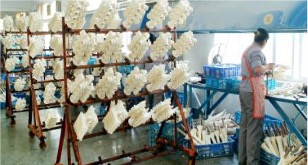 Wax pattern assembly: the tree structure defines how metal flows into the shell and how consistently each cavity fills.
Step-by-Step Breakdown: Process Points and the Questions They Raise
Process knowledge is what makes a technical conversation with a foundry productive. The nine steps below follow the sequence a steel casting travels, paired with the verification question each step should trigger in a buyer’s evaluation.
| Step | What happens | Question that exposes a capability gap |
|---|---|---|
| 1. Pattern and die making | Wax pattern tooling is produced, machined or 3D-printed, from the customer drawing. | Who makes the tooling, and how is the first article approved? |
| 2. Wax injection and pattern assembly | Wax patterns are injected and assembled into trees for shell building. | How are wax defects detected before the shell is built? |
| 3. Shell building and drying | Ceramic slurry layers are applied and dried around the wax tree. | Which shell system is used, water-glass, silica-sol or composite, and which tolerance grade does it support? |
| 4. Dewaxing and shell firing | Wax is removed and the ceramic shell is fired to working strength. | How is shell integrity checked before pouring? |
| 5. Melting and pouring | Steel is melted in induction furnaces and poured into the shells. | How is chemical composition verified before the pour? |
| 6. Knockout, cut-off and deburring | Shells are broken out, gates removed and parts deburred. | How are gate marks and flash controlled on finished faces? |
| 7. Heat treatment | Castings are heat treated to the required condition, for example quenched and tempered. | Which heat treatment condition applies, and how is it verified? |
| 8. Machining | CNC machining centres bring critical features to final size; machining tolerance is stated at 0.01 mm. | Is machining performed in house, and to which datum scheme? |
| 9. Inspection and documentation | Spectrometer, X-ray, ultrasonic, hardness and tensile testing, plus CMM dimensional inspection. | Which tests are routine, which are on request, and what records ship with the parts? |
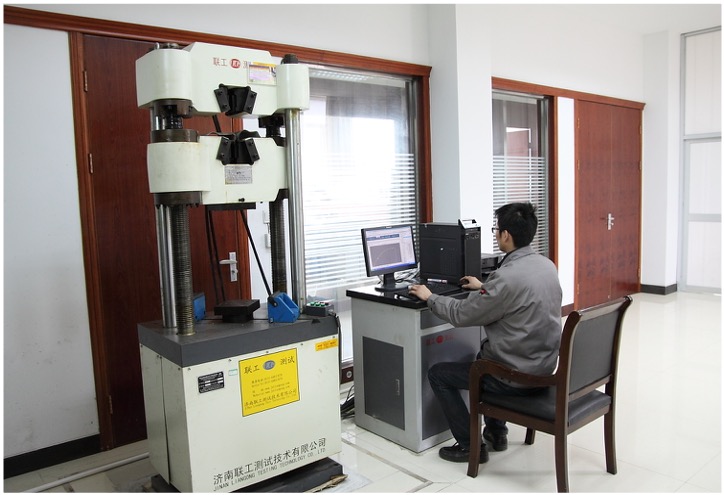 Inspection is the step that converts a casting claim into evidence a purchasing team can file.
Selection Factors: What to Verify Before You Commit
The following factors decide whether a supplier is a fit for a specific project. Each one is a question the buyer can put in writing during the evaluation stage.
- Process route and tolerance grade. Establish whether the part needs tight as-cast control through silica-sol casting, whether CT8 through silica-sol composite casting is acceptable, or whether specific features must be machined to 0.01 mm. Ask for the tolerance grade feature by feature, not as a single figure for the drawing.
- Material grade and heat treatment condition. Confirm the steel family, carbon steel, alloy steel, stainless steel or ductile iron, and the exact grade against the drawing, then confirm the heat treatment condition and how hardness is verified.
- Surface requirement. Surface roughness is stated as Ra 6.4 to 12.5 μm depending on process and post-treatment. Define which surfaces need which finish rather than applying one value to the whole part.
- Inspection scope. Agree in advance which of the available methods apply: spectrometer for composition, X-ray or ultrasonic for internal soundness, hardness and tensile testing for mechanical properties, CMM for dimensions.
- Standards and acceptance criteria. Where carbon steel castings for high-temperature service are involved, ASTM A216/A216M is a common reference; customer-specific standards should be named explicitly in the RFQ.
- Sample path. Rapid sample development with 3D-printed patterns allows validation before a production mold is committed. Approve samples against the same inspection plan that will run in mass production.
- Order size and tooling. Wayscan states a minimum order quantity of 100 kg for castings. Clarify tooling ownership, storage and maintenance at the same time.
- Lead time and capacity fit. The stated lead time is 30 to 60 days, with monthly casting capacity of 1,500 tons. Match the supplier’s rhythm to your own build schedule before signing.
- After-sales and quality tracking. Wayscan provides technical support and quality tracking, with specific warranty and liability terms agreed in contract.
Use Cases: Where Investment Cast Steel Parts Fit
Investment casting is specified where part geometry, weight reduction or machining avoidance justifies the process. The applications below reflect the industries Wayscan supplies.
Automotive and truck. Wayscan reports serving a US automotive parts OEM for a truck axle system application, with 1000 tons of castings supplied across a relationship it describes as 30 years of stable operation. The reported result is that dimensional accuracy and mechanical properties meet the customer’s drawing requirements and the castings present a good appearance. This is the reference point buyers should use when evaluating Chinese steel casting manufacturers for automotive and suspension-adjacent components: the questions are the same, tolerance grade per feature, heat treatment condition, and the inspection record attached to each lot.
Construction and agricultural machinery. Brackets, links, housings and structural components that carry load and see outdoor duty cycles, often specified in carbon or alloy steel with a defined heat treatment condition.
Forklifts and material handling. Load-bearing parts where a cast geometry replaces welded assemblies and removes potential fatigue initiation points.
Mining equipment. Wear-facing components where material selection and heat treatment condition drive service life.
Valves, pumps and general machinery. Valve bodies, pump housings, flanges, hinges, connectors and other machined cast components, produced to drawing with machining included in the supply scope.
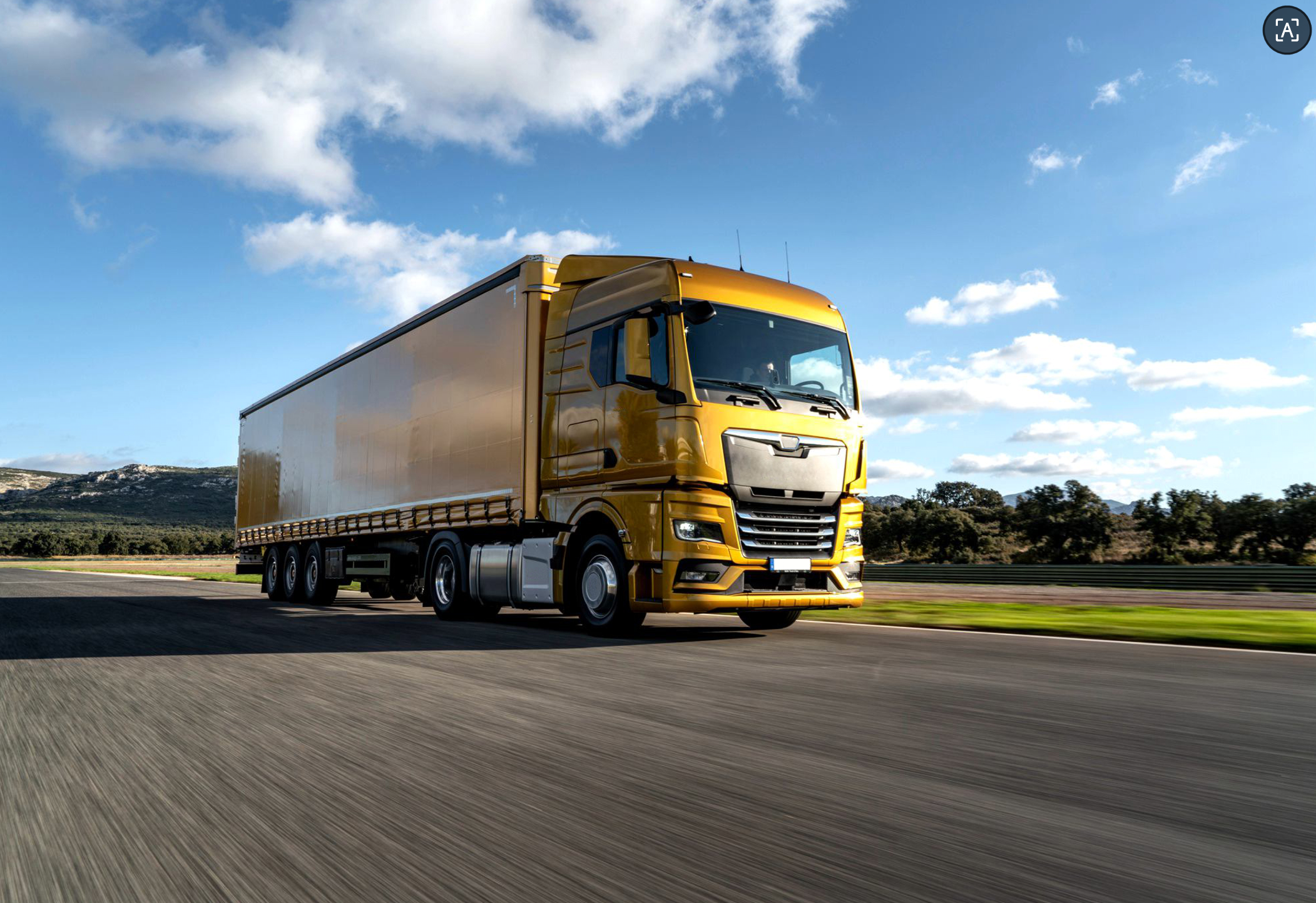 Truck and trailer applications: a segment where tolerance grade, heat treatment and inspection records decide supplier approval.
Comparison Table: Investment Casting Routes at a Glance
The table below compares the process routes listed in Wayscan’s published investment casting data. It is limited to documented values, so buyers can see exactly where a question still needs to be asked.
| Process route | Stated dimensional tolerance | What the buyer should confirm before ordering |
|---|---|---|
| Silica-sol investment casting | CT6 | Whether every critical feature falls within CT6, or some require machining |
| Silica-sol composite investment casting | CT8 | Whether CT8 satisfies the tightest tolerance on the drawing |
| Post-cast CNC machining | 0.01 mm | Datum scheme, machining allowance, and whether machining is performed in house |
| Water-glass investment casting | Grade not stated in the available process data | Which tolerance grade applies to the specific drawing |
Surface roughness across these routes is stated as Ra 6.4 to 12.5 μm, depending on the casting process and post-treatment.
Inspection capability can be read the same way. The methods below are the ones listed for the Wayscan investment casting line, and each one answers a different buyer question.
| Inspection method | What it verifies for the buyer |
|---|---|
| Spectrometer | Chemical composition of the steel against the specified grade |
| X-ray | Internal soundness of the casting |
| Ultrasonic testing | Internal soundness where volumetric inspection is required |
| Hardness testing | Heat treatment condition actually achieved |
| Tensile testing | Mechanical properties of the material |
| CMM | Dimensional accuracy against the customer drawing |
 X-ray inspection addresses the defect class that dimensional checks cannot detect.
 CMM inspection converts a stated tolerance such as CT6 or 0.01 mm into a measurable result.
FAQ: Investment Casting for Steel Parts
Which standards and inspection methods should be specified for investment cast steel parts?
For carbon steel castings used in high-temperature service, ASTM A216/A216M is a commonly referenced specification covering carbon steel castings suitable for fusion welding. Conformity, however, is proven by inspection evidence rather than by the standard name alone: chemical composition by spectrometer, internal soundness by X-ray or ultrasonic testing, heat treatment condition by hardness testing, mechanical properties by tensile testing, and dimensions by CMM. Wayscan lists all of these methods among its inspection capabilities. Because its investment casting data states that specific dimensions, material grades and mechanical properties are customized per customer drawing, the acceptance criteria, test frequency and documentation package should be written into the RFQ rather than assumed.
Can investment casting handle complex steel parts such as gearbox housings and automotive suspension components?
Yes. Wayscan’s investment casting product data lists pipe elbows, clevis brackets, yokes, gearbox housings, transmission housings, mounting brackets and link arms, produced in carbon steel, alloy steel, stainless steel and ductile iron. Stated tolerances are CT6 for silica-sol casting, CT8 for silica-sol composite casting and 0.01 mm for machining, with surface roughness of Ra 6.4 to 12.5 μm depending on process and post-treatment. On the automotive side, Wayscan reports serving a US automotive parts OEM with 1000 tons of castings for a truck axle system application, a relationship it describes as 30 years of stable operation, where dimensional accuracy and mechanical properties meet the customer’s drawing requirements. Buyers sourcing suspension-adjacent steel components from Chinese manufacturers should verify the same three points: tolerance grade per feature, heat treatment condition, and the inspection record that accompanies each lot.
What drives the cost of an investment cast steel part?
The main cost drivers are the process route, water-glass, silica-sol or silica-sol composite, the material grade, part size and geometry, the heat treatment condition, whether machining is included, the inspection scope, and the tooling requirement. Wayscan states a minimum order quantity of 100 kg for castings and a monthly capacity of 1,500 tons. Because two quotations for the same drawing can cover different scopes, the productive comparison is scope against scope: the same tolerance grade, the same heat treatment, the same machining allowance and the same inspection package.
Can I approve a sample before committing to a production order?
Wayscan supports rapid sample development including 3D-printed pattern support, which allows samples to be produced without a full production mold, and customization by customer drawings covering size, geometry, material, surface and heat treatment. The practical approach is to approve the sample against the same inspection plan that will be applied to mass production, with a dimensional report and material or hardness results as applicable, so the approval carries meaning into the next lot.
What lead time and order size should buyers plan for, and how do I start?
Wayscan states a lead time of 30 to 60 days and a minimum order quantity of 100 kg, with monthly casting capacity of 1,500 tons and export markets including the USA, Japan, Canada, Germany, Korea and Australia. Lead time runs from drawing release and any tooling or sample approval, so the schedule should be agreed against those milestones instead of as a single number. To start, send the drawing together with the material grade, tolerance grade, heat treatment condition, surface requirement and inspection scope. You can request a quote or a sample through www.wayscan.com, by email at sales@nb-casting.com, or by phone at +86-574-65273750.
Conclusion: Turn the Technical Questions into a Fixed Scope
Investment casting delivers its value on steel parts when the technical scope is defined before the order, not after the first rejected sample. The process points that matter are the shell route, the tolerance grade, the heat treatment condition and the machining scope. The selection factors that matter are inspection evidence, sample validation, order size, capacity fit and after-sales support. A buyer who puts those into the RFQ in writing is comparing suppliers on the same basis, and a supplier who can answer each one with documentation is a different risk category from one who cannot.
Wayscan Metal Products Co., Ltd. answers those points with a documented investment casting line, stated tolerances of CT6, CT8 and 0.01 mm machining, inspection methods covering spectrometer, X-ray, ultrasonic, hardness, tensile and CMM, and a supply history that includes a US automotive parts OEM relationship for truck axle system components. The next step is simply to test the scope against your own drawing.
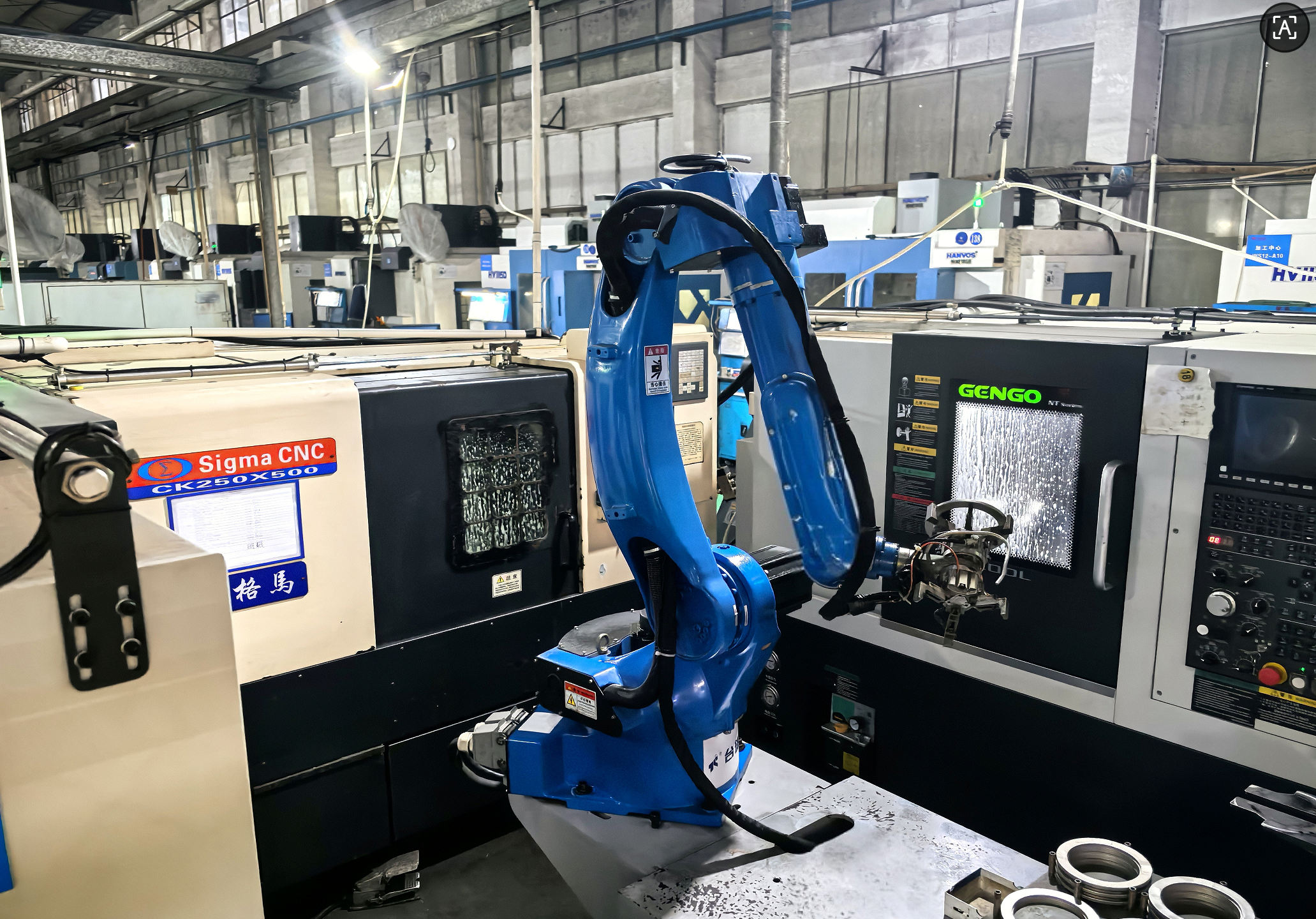 From drawing to sample to series supply, the technical scope you fix at the quotation stage is what the production line delivers.
Share your casting drawing with material grade, tolerance grade, heat treatment condition and inspection requirements, and request a quotation or a sample evaluation. Wayscan Metal Products Co., Ltd. can be reached at sales@nb-casting.com or +86-574-65273750, with shipments served to markets including the USA, Japan, Canada, Germany, Korea and Australia.
Download the full company presentation and capability overview: Wayscan Metal Products Co., Ltd. Presentation (PDF)
Have Questions or Need More Details?
Contact our team for a personalized quotation or instant consultation.
Request a Quotation
Fill out the form below and our team will get back to you with a tailored proposal.
WhatsApp Direct Chat
Prefer to chat in real-time? Message us on WhatsApp for instant assistance & quick answers.
- Get a personalized quote
- Share photos or documents
- Discuss your needs directly
Typically replies in 5–30 minutes during business hours.