
WAYSCAN METAL PRODUCTS CO., LTD: Precision Investment Casting Manufacturer Profile and Capability Analysis
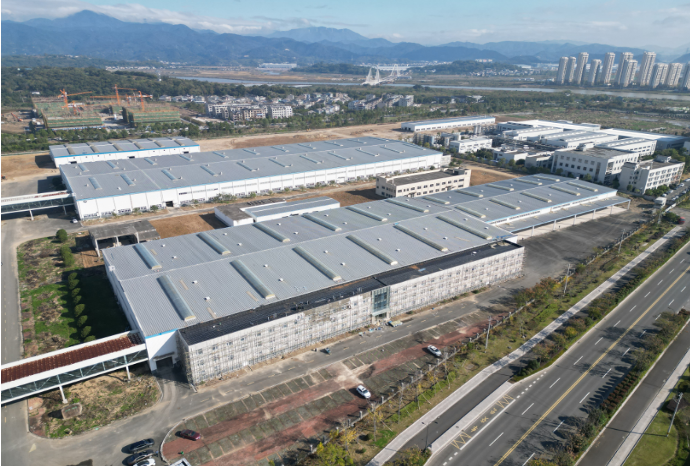
WAYSCAN METAL PRODUCTS CO., LTD is a China-based precision investment casting manufacturer founded in 1991, operating a 46,000 m² plant in Ninghai, Ningbo, with more than 500 employees and a company-reported annual casting capacity of 20,000 tons. The company produces stainless steel, carbon steel and alloy steel investment castings and machined cast components using water-glass, silica-sol and silica-sol composite processes, and reports a 70% export ratio with China, Japan and the USA as its main markets.
This profile is written for importers, OEM engineers and procurement teams at the Awareness and Research stage — the point where a buyer has identified precision investment casting as the manufacturing route but has not yet shortlisted suppliers. It covers what the company manufactures, how its published process routes translate into tolerance and surface-finish language, how its quality system is structured, which industry recognitions it holds, and which claims a buyer should still verify before issuing a purchase order.
Every company-level statement below is drawn either from WAYSCAN's own published product, application and company data or from a named third-party source. Where a figure is company-reported rather than independently verified, it is labelled as such.
Why a Verified Supplier Profile Matters Before You Shortlist a Foundry
The core problem at the research stage is not a shortage of suppliers — it is a shortage of comparable information. Three specific gaps make foundry shortlisting unreliable if a buyer works from marketing pages alone.
First, tolerance words are not comparable units. ‘Tight tolerance’ and ‘high precision’ mean nothing commercially until they are expressed against a tolerance-grade framework. ISO 8062-3:2007 defines the general dimensional and geometrical tolerances and machining allowances for castings, and it is the reference standard that makes a supplier's tolerance claim testable in an RFQ and checkable at incoming inspection. Without a grade and a datum scheme, two suppliers can both claim precision while delivering parts that differ by several tolerance grades.
Second, material names are not material specifications. ‘Stainless steel’ covers many grades with different mechanical and corrosion behaviour. Purchasable casting requirements are normally written against a product specification such as ASTM A957/A957M for steel and alloy investment castings for general industrial use, or ASTM A732/A732M for investment cast carbon steel, low-alloy steel and cobalt alloy castings. A supplier that can only state a material family cannot yet be compared on material capability.
Third, certification language is frequently used incorrectly. CE marking is a conformity marking under EU harmonisation legislation, affixed by the manufacturer or its authorised representative to declare conformity with applicable EU requirements — it is not a certificate issued to a component foundry. A search for ‘CE certified precision investment casting’ therefore describes a supplier attribute that does not exist in the form the phrase implies. Regulatory obligations for a casting-containing product sit with the finished-product manufacturer, with the foundry operating inside that manufacturer's quality and traceability chain.
Procurement implication: a defensible shortlist requires four things per supplier — a tolerance grade expressed against ISO 8062-3, a material specification reference, a certificate scope and validity you can check, and a documented inspection method. Anything less is a positioning statement, not a qualification input.
Industry Background: Market Size, Material Mix and the Standards Landscape
The global investment casting market was valued at USD 19.64 billion in 2025 and is projected to reach USD 30.56 billion by 2034, a compound annual growth rate of 5.1% over the 2026–2034 forecast period (Fortune Business Insights). Within that total, automotive investment casting sales reached USD 1.70 billion in 2024, with Europe, China and North America accounting for 71% of demand (Investment Casting Institute / INCAST). Stainless steel was the largest single material type, representing 46.8% of investment casting material demand in 2025.
Those three data points shape supplier screening. Demand is concentrated in three producing and consuming regions, which is why a supplier's export footprint and customer geography are relevant qualification inputs rather than marketing decoration. Automotive demand is large and quality-gated. And stainless steel capability — including the ability to state grades rather than a material family — is one of the most frequently requested material positions in the market.
On the compliance side, the framework governing precision investment casting procurement is stable and documented. The table below lists the reference documents buyers most often need to name in a specification or supplier questionnaire.
| Reference | Scope | Why it appears in a casting RFQ |
|---|---|---|
| ISO 9001:2015 | Quality management systems — requirements | General QMS baseline for any organisation, including casting manufacturers |
| IATF 16949:2016 | QMS requirements for automotive production and relevant service parts organisations | Supplier qualification gate for automotive supply chains |
| ISO 13485:2016 | Medical devices — QMS requirements for regulatory purposes | Supplier-side quality framework for medical device component supply |
| ISO 8062-3:2007 | General dimensional and geometrical tolerances and machining allowances for castings | Converts ‘tight tolerance’ into a purchasable grade |
| ASTM A957/A957M | Common requirements for steel and alloy investment castings, general industrial use | Product specification for steel and alloy investment castings |
| ASTM A732/A732M | Investment cast carbon steel, low-alloy steel and cobalt alloy castings | Material-scope specification for carbon and low-alloy steel work |
| EU Regulation 2017/745 (MDR) | EU market access for medical devices; fully applicable since 26 May 2021 | Applies to the finished device; flows down to component traceability requirements |
| EU Regulation 2023/1230 | Machinery Regulation, replacing Directive 2006/42/EC and applying from 20 January 2027 | Relevant to machinery builders sourcing cast components for the EU market |
| HS heading 7325 | Other cast articles of iron or steel | Tariff classification reference — not a proxy for the precision investment casting market |
A classification caution belongs here. HS heading 7325 covers other cast articles of iron or steel, but many precision investment castings are classified under the heading of the finished article they become, such as machinery or automotive parts. Trade values under heading 7325 alone should therefore not be aggregated and presented as the size of the precision investment casting market.
Company Overview: WAYSCAN METAL PRODUCTS CO., LTD at a Glance

WAYSCAN METAL PRODUCTS CO., LTD was established in 1991 and describes more than 30 years of precision casting manufacturing experience. The registered capital of the company is RMB 50 million. The production base covers 46,000 m² and employs more than 500 staff, including a research and development team of more than 20 senior engineering and technical personnel.
| Profile item | Company-reported detail |
|---|---|
| Legal entity name | WAYSCAN METAL PRODUCTS CO., LTD |
| Established | 1991 (more than 30 years in precision casting manufacturing) |
| Registered capital | RMB 50 million |
| Production base | 46,000 m² |
| Employees | 500+ |
| Engineering and technical team | 20+ senior engineering and technical personnel |
| Annual casting capacity | 20,000 tons |
| Export ratio | 70% |
| Main markets | China, Japan, USA |
| Casting processes | Water-glass investment casting; silica-sol investment casting; silica-sol composite investment casting |
| Materials | Stainless steel, carbon steel, alloy steel, ductile iron (specific grades confirmed with the customer) |
| Address | No.739, Xinghai (N) Road, Ninghai, Ningbo, 315600, China |
| Website | www.wayscan.com |
The 70% export ratio combined with a main-market mix of China, Japan and the USA is a relevant screening fact for importers: it indicates an established export workflow rather than a domestic-only operation. It does not, by itself, demonstrate qualification for a specific automotive or medical programme, which is always a separate, part-level exercise.
On process development, the company reports that in 2020 it invested in composite-process precision casting production to replace its original water-glass process line, a change it links to higher production efficiency and reduced environmental impact. Buyers evaluating a foundry on process modernity can treat that as a company-reported capital decision and ask for the corresponding process documentation during audit.
Core Products and Solutions
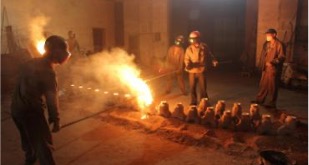
The company's primary product is classified as investment casting (lost-wax casting), supplied under a water-glass and silica-sol process family. Product scope covers precision castings, investment castings, stainless steel castings, carbon steel castings, alloy steel castings and machined cast components, with casting combined with in-house machining operations.
The published model designation for the investment casting line covers Pipe Elbow, Clevis Bracket, Yoke, Gearbox Housing, Transmission Housing, Mounting Bracket and Link Arm — a component family set typical of structural, mechanical and driveline applications rather than decorative or non-load-bearing parts.
Declared process and performance parameters
- Dimensional tolerance: silica-sol (CT6), silica-sol composite (CT8), machining (0.01 mm)
- Surface roughness: Ra 6.4–12.5 μm, depending on casting process and post-treatment
- Process types: silica-sol composite investment casting; silica-sol investment casting
- Materials: carbon steel, alloy steel, stainless steel, ductile iron — specific grades to be confirmed by the customer
- Customisation: specific dimensions, material grades and mechanical properties are produced to customer drawings
- Integrated scope: mould making, casting, heat treatment, machining and inspection under one supplier
- Sampling: rapid sample development supported by 3D-printed pattern development
Two of these points carry more procurement weight than the others. The stated tolerance structure separates as-cast capability from machined capability — CT6 for silica-sol, CT8 for the silica-sol composite route and 0.01 mm for machined features — which lets a buyer assign the correct route per feature instead of demanding a single blanket tolerance across the drawing. And the combination of casting with in-house machining means the buyer is not required to manage a separate machining subcontractor for post-cast operations, which reduces the number of parties responsible for a critical dimension.
Scope of the manufacturing solution
The company positions itself as an integrated supplier performing casting, heat treatment, machining and assembly to customer drawings, operating a combination of batch production and order-based customisation. It accepts custom production from customer drawings and sample development. Requirements such as certifications, material grades or surface treatment must be specified by the customer in advance — a practical point, because those parameters change the process route, inspection plan and documentation package rather than being add-ons at the end of a project.
Manufacturing, R&D and Quality Capability
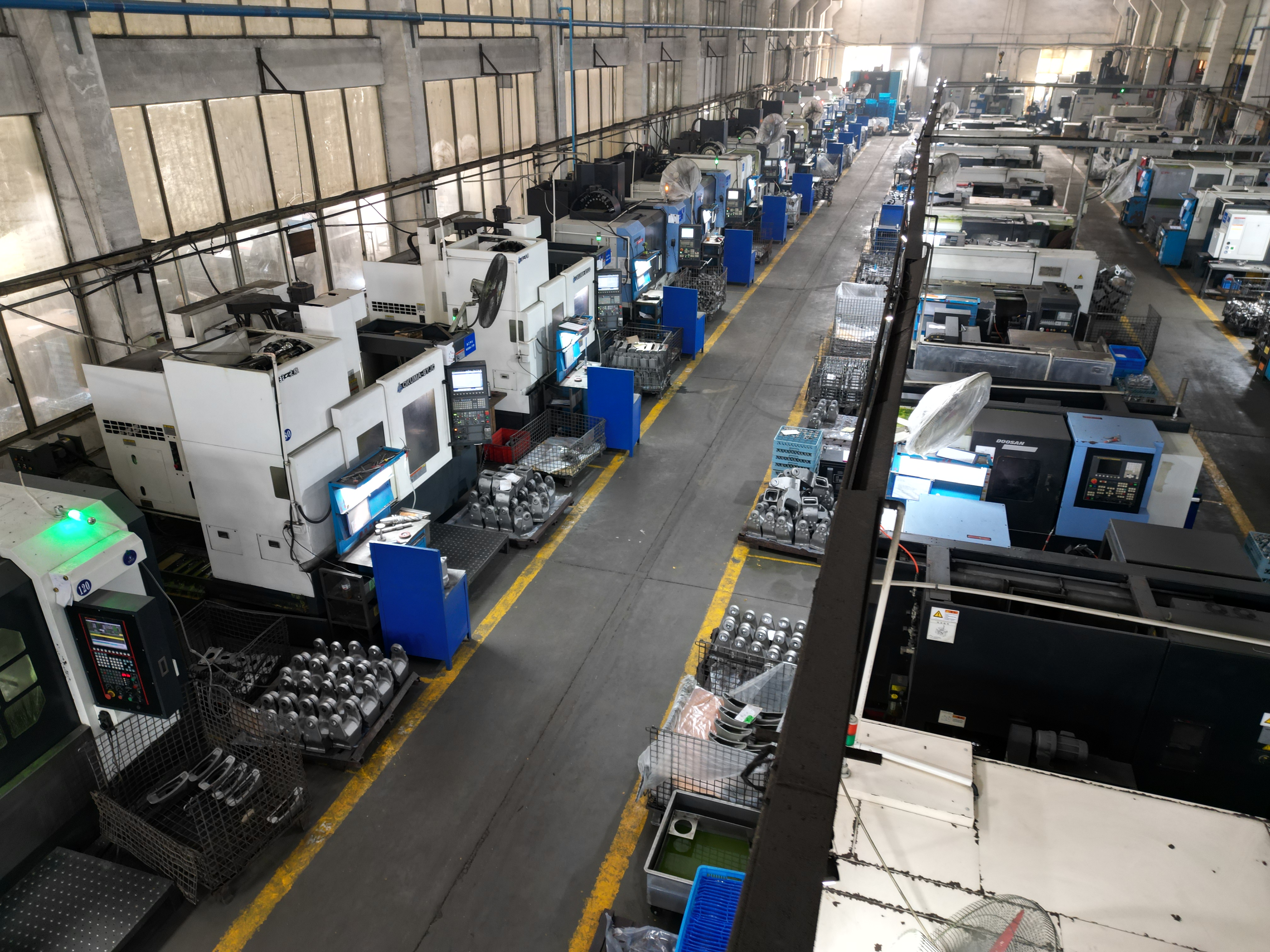
Manufacturing workflow
WAYSCAN's published production workflow runs through wax shell production, tree assembly, pouring, deburring and machining workshops. That sequence describes the lost-wax route from pattern to finished component: wax patterns are produced and assembled into a tree, ceramic shell is built and dried around the assembly, metal is poured, and the resulting castings are cleaned before moving into machining.
Equipment basis
The company reports induction furnaces, CNC machining centres and testing equipment, including spectrometers, X-ray, ultrasonic testing and CMM. In casting procurement that equipment list matters for three reasons: melting control determines chemistry consistency, X-ray and ultrasonic inspection determine whether internal defects are detectable and documented rather than discovered at the customer's incoming inspection, and CMM capacity determines whether dimensional reports can be supplied per part rather than per batch.
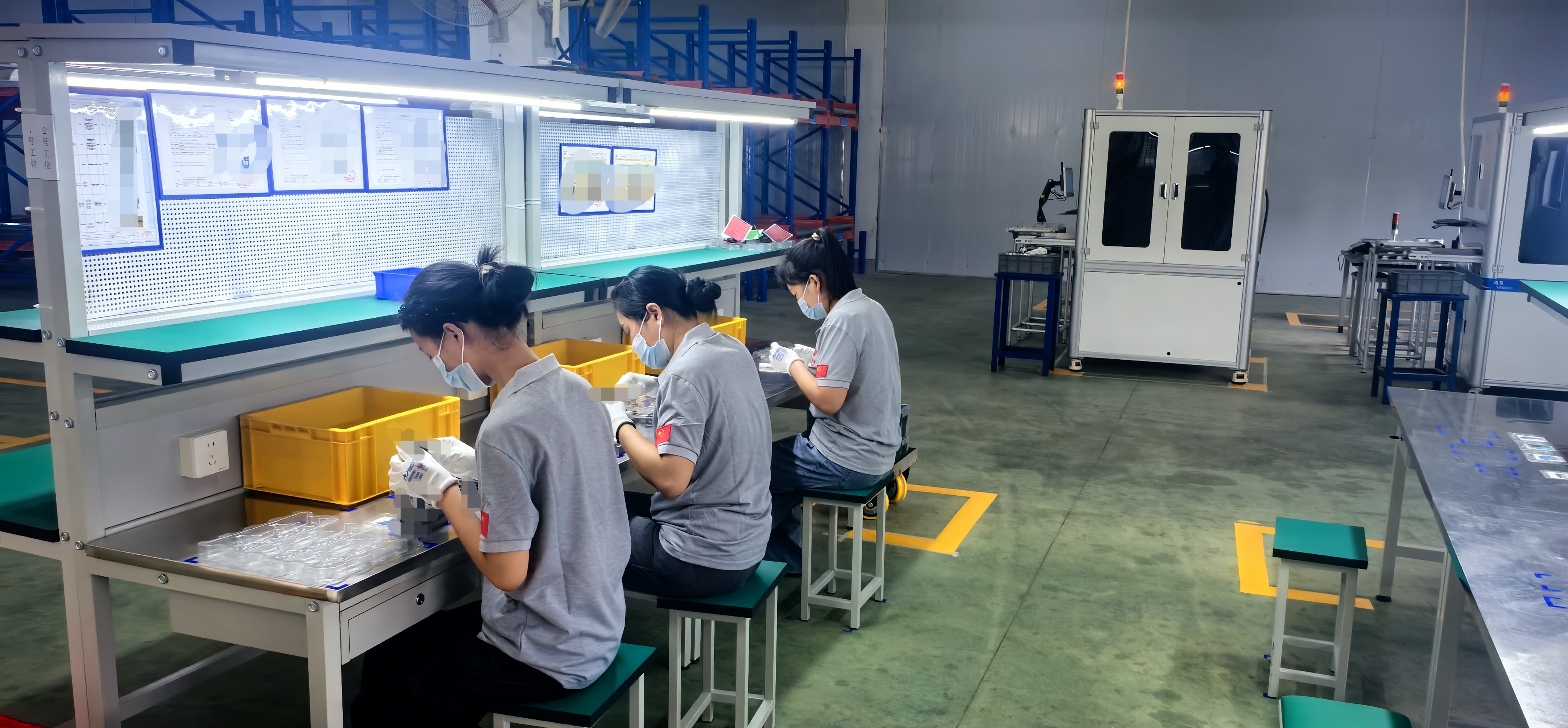
Quality systems, as reported
WAYSCAN reports holding ISO 9001:2015, IATF 16949:2016, ISO 14001:2015 and ISO 45001:2018 certifications. These are company-reported positions. In practice, a buyer should convert them into verifiable evidence by requesting the certificate number, the issuing certification body, the certified scope and the validity date for each standard, and by confirming that the scope covers both the casting and machining facilities. IATF 16949:2016 in particular is a programme-level qualification gate in automotive supply chains, assessed against automotive production and relevant service parts organisations rather than against a general industrial supplier at large.
Environmental and resource performance
The company reports recognition in 2023 as a waste-free factory, a four-star green factory and a water-saving factory, alongside a Ninghai charitable enterprise designation. For buyers with supplier sustainability questionnaires, these are documented positions that can be followed up with the underlying assessment records.
Step-by-Step: How a Custom Investment Casting Project Runs
The following sequence reflects the workflow and capability statements the company publishes. It is written as a buyer-facing process so that each stage can be mapped to a deliverable and a verification step.
- Requirement intake. The customer supplies the drawing together with the parameters that affect the route: material grade, certification requirements, mechanical properties and surface treatment. The company states these should be specified in advance.
- Process route selection. The part is assigned to water-glass, silica-sol or silica-sol composite casting, depending on geometry, tolerance requirement and volume. Tolerance expectations are set at this point — CT6 for silica-sol and CT8 for the silica-sol composite route under the supplied data.
- Mould and pattern development. Tooling is produced, and 3D-printed patterns are used to support sample development. This stage determines how quickly a first article can be evaluated.
- Wax pattern and shell building. Wax shells are produced and assembled into trees, then shelled and dried ahead of pouring.
- Melting and pouring. Metal is melted in induction furnaces and poured into the shell assemblies.
- Deburring and finishing. Castings are separated and cleaned in the deburring stage before inspection or machining.
- Heat treatment and CNC machining. Where the drawing requires it, castings move through heat treatment and then into the machining workshops, where machined features are produced to the stated 0.01 mm machining tolerance.
- Inspection and release. Dimensions, material composition, mechanical properties and product quality are verified using the company's inspection and testing equipment, including spectrometry, X-ray, ultrasonic testing and CMM.
What to fix at the RFQ stage: tolerance grade and datum scheme, material specification and grade, heat-treatment condition, machining scope and surface finish, inspection method and reporting format, and the documentation package required at first article and at series production.
Use Cases: Where These Castings Are Applied

The published application scope covers automotive, forklift, mining, agricultural machinery, construction machinery, valves, and general machinery components. The company describes the product as suitable for structural components, mechanical parts and valve bodies under various operating conditions, with the exact environment specified by the customer, and as suited to complex-shaped, small-to-medium castings.
Mapping the component families to those industries gives a practical picture of fit. Gearbox housings, transmission housings and mounting brackets sit in automotive and driveline applications. Yokes and link arms are linkage and actuation components found across agricultural and construction machinery. Pipe elbows and valve-related bodies serve valve manufacturing and fluid-handling assemblies. Clevis brackets are structural connection parts used widely in lifting and machinery assemblies.
Two boundaries should be stated plainly. First, the supplied application data for WAYSCAN covers automotive, forklift, mining, agricultural machinery, construction machinery, valves and general machinery — medical device casting is not listed in the company's published application scope. A buyer with a medical device programme would need separate evidence on quality-system status, material traceability, cleaning and regulatory role before treating the supplier as qualified for that segment. Second, the working-condition statements are expressed as suitability with the environment to be specified by the customer, which is normal and correct practice, but it means the engineering judgement for a given service condition remains with the buyer at RFQ stage.
Comparison Table: Process Routes, Tolerances and Materials
The table below compares the process routes and performance figures that appear in WAYSCAN's published product data. It is a route-selection aid, not a supplier ranking.
| Route | Dimensional tolerance (as published) | Surface roughness | Practical positioning in the published data |
|---|---|---|---|
| Silica-sol investment casting | CT6 | Ra 6.4–12.5 μm (process and post-treatment dependent) | Primary precision route; used for stainless steel, carbon steel and alloy steel components |
| Silica-sol composite investment casting | CT8 | Ra 6.4–12.5 μm (process and post-treatment dependent) | Composite process route introduced to replace the original water-glass line in 2020 |
| Water-glass investment casting | Not specified in the published product data — confirm per drawing | Ra 6.4–12.5 μm (process and post-treatment dependent) | Historical process family still listed in the product classification |
| CNC machining (post-cast) | 0.01 mm | Determined by machining and post-treatment | Applied to machined cast components produced in-house |
Read together with the material list — carbon steel, alloy steel, stainless steel and ductile iron, with grades confirmed by the customer — the table supports a straightforward sourcing conclusion: the supplier has published a route structure that separates as-cast from machined tolerance, which is the minimum needed for a comparable RFQ. The next step for a buyer is to convert those classes into drawing-level requirements with a datum scheme and inspection method, then confirm the achievable result on a first article.
Market Recognition and Industry Standing
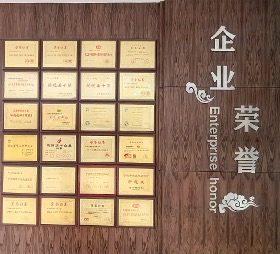
WAYSCAN reports a consistent record of regional and industry recognition. From 2012 to 2024, the company was rated among the top 50 industrial enterprises and top 50 taxpayers in Ninghai County. In 2014, 2018 and 2022, it was awarded the honour of Leading Enterprise in China's Foundry Industry by the China Foundry Association — three award cycles across those years.
Within industry associations, the company reports serving as a vice president unit of the Ningbo Foundry Association and a director unit of the Zhejiang Foundry Association, and that it was appointed a director unit of the China Foundry Association in 2015.
How should a procurement team weigh these? Association roles and regional enterprise awards indicate continuity, local standing and participation in the industry's technical community. They are useful signals when screening for supplier stability — particularly for buyers concerned about single-source risk — but they are not substitutes for a part-level qualification, a capability audit or a verified certificate scope. The appropriate use is as supporting evidence in a shortlisting decision, not as the decision itself.
Buyer's Evaluation Checklist: Selling Points and Procurement Value
Translated into procurement terms, the company's most relevant strengths are structural rather than promotional.
- Capacity for volume programmes. A company-reported annual casting capacity of 20,000 tons indicates a supplier sized for series production rather than prototype-only work.
- Integrated casting-to-machining scope. Casting, heat treatment, machining and inspection sit under one supplier, which reduces the number of parties accountable for a critical dimension and simplifies non-conformance resolution.
- Published tolerance structure. CT6 for silica-sol, CT8 for the composite route and 0.01 mm for machined features gives a buyer a starting basis for feature-level tolerance allocation.
- Material breadth within ferrous casting. Stainless steel, carbon steel, alloy steel and ductile iron options cover a wide share of industrial component demand, consistent with stainless steel being the largest material type in the 2025 market at 46.8% of demand.
- Sampling speed. 3D-printed pattern development is used to support sample development, which shortens the interval between drawing release and first-article evaluation.
- Export orientation. A reported 70% export ratio with main markets in China, Japan and the USA indicates established export documentation and logistics routines.
Balanced against these, a buyer should confirm the following before commitment: current certificate numbers, scopes and validity for the reported ISO 9001:2015, IATF 16949:2016, ISO 14001:2015 and ISO 45001:2018 positions; the achievable tolerance on the specific geometry in question rather than the class in general; the inspection report format and sampling plan; and commercial terms — tooling cost, tooling ownership, MOQ, sample cost, lead time and Incoterms.
On price and lead time: published, independently verified price and lead-time benchmarks for precision investment castings are not available in the reviewed public evidence base. Buyers should therefore obtain them directly through a standardised RFQ issued to several shortlisted foundries with identical drawings, materials and annual-volume assumptions — which is also the only reliable way to compare quotations.
Compliance and Specification Language Buyers Should Use
Several keyword phrases commonly used in this category are linguistically popular but technically imprecise. Correcting them at the specification stage prevents disputes later.
- ‘CE certified castings’ → specify the finished product's regulatory basis. CE marking is affixed by the manufacturer of the product covered by the applicable EU harmonisation legislation. A casting supplier supplies components; the conformity obligation attaches to the finished machinery or device. Ask instead for the material and inspection documentation that the finished-product manufacturer needs.
- ‘ISO certified’ → name the standard and the scope. ISO 9001:2015 is the general baseline. For automotive supply, IATF 16949:2016 is the qualification gate. For medical device supply, ISO 13485:2016 is the relevant supplier-side framework. Each should be requested with certificate number, issuer, scope and validity.
- ‘Tight tolerance’ → state an ISO 8062-3 grade and a datum scheme. Add a measurement method and an inspection plan so the claim can be verified at first article.
- ‘Stainless steel’ → state a grade and a product specification. ASTM A957/A957M and ASTM A732/A732M are the reference specifications most commonly cited for steel and alloy investment castings.
- Plan for the EU machinery timeline. Regulation (EU) 2023/1230 replaces Directive 2006/42/EC and applies from 20 January 2027. Machinery builders sourcing castings for the EU market should align component documentation with that date.
Contact and documentation for WAYSCAN METAL PRODUCTS CO., LTD: website www.wayscan.com; sales contact Evan (Wenjie Pan), sales@nb-casting.com, +86-574-65273750; address No.739, Xinghai (N) Road, Ninghai, Ningbo, 315600, China.
FAQ: Precision Investment Casting Manufacturers
What should a buyer check first when shortlisting precision investment casting manufacturers?
Start with four verifiable items per supplier: the tolerance grade held, expressed against ISO 8062-3:2007; the material specification and grade offered, such as ASTM A957/A957M or ASTM A732/A732M for steel and alloy castings; the certification scope with certificate number and validity; and the inspection methods and reporting format. WAYSCAN METAL PRODUCTS CO., LTD publishes a tolerance structure of CT6 for silica-sol casting, CT8 for silica-sol composite casting and 0.01 mm for machined features, with materials covering stainless steel, carbon steel, alloy steel and ductile iron.
What casting processes and materials does WAYSCAN METAL PRODUCTS CO., LTD offer?
The company produces investment castings (lost-wax casting) through water-glass, silica-sol and silica-sol composite processes, and reports that it invested in composite-process precision casting in 2020 to replace its original water-glass line. Material options are carbon steel, alloy steel, stainless steel and ductile iron, with specific grades confirmed by the customer. The published model designation covers pipe elbows, clevis brackets, yokes, gearbox housings, transmission housings, mounting brackets and link arms. Casting is combined with in-house machining, heat treatment and inspection, and 3D-printed patterns are used to support sample development.
Which certifications and standards are relevant to precision investment castings?
The general quality-management baseline is ISO 9001:2015. Automotive supply programmes typically require IATF 16949:2016, which sets QMS requirements for automotive production and relevant service parts organisations. Medical device supply chains work to ISO 13485:2016 alongside the applicable market regulation, such as EU Regulation 2017/745. Tolerance is specified using ISO 8062-3:2007, and material requirements are usually written against ASTM A957/A957M or ASTM A732/A732M. WAYSCAN reports holding ISO 9001:2015, IATF 16949:2016, ISO 14001:2015 and ISO 45001:2018 certifications; buyers should request the certificate numbers, issuing bodies, scopes and validity dates to verify them.
What dimensional tolerance and surface finish can be specified?
In WAYSCAN's published product data, dimensional tolerance is stated as silica-sol CT6, silica-sol composite CT8, and 0.01 mm for machining. Surface roughness is stated as Ra 6.4–12.5 μm, depending on the casting process and post-treatment. Specific dimensions, material grades and mechanical properties are produced to customer drawings. Because as-cast and machined tolerances are different capabilities, buyers should allocate tolerance per feature on the drawing rather than applying a single blanket figure, and should confirm the result through first-article inspection.
How can a buyer start an evaluation, sample or quotation?
Send the component drawing together with the parameters that determine the process route: material grade, certification requirements, mechanical properties, surface treatment, annual volume and inspection expectations. The company states that certifications, material grades and surface treatment requirements should be specified in advance, and it accepts custom production from customer drawings and sample development supported by 3D-printed patterns. WAYSCAN METAL PRODUCTS CO., LTD can be contacted at sales@nb-casting.com or +86-574-65273750, and its full capability presentation is available for download in the next section.
Conclusion: Industry Positioning and Procurement Value
WAYSCAN METAL PRODUCTS CO., LTD sits in the ferrous precision investment casting segment: a China-based manufacturer established in 1991, operating a 46,000 m² plant with more than 500 employees, a reported annual capacity of 20,000 tons and a 70% export ratio across China, Japan and the USA. Its published capability combines water-glass, silica-sol and silica-sol composite casting routes with in-house heat treatment, CNC machining and inspection, applied to automotive, forklift, mining, agricultural and construction machinery, valve and general machinery components.
For a buyer at the research stage, the practical value of this profile is not a recommendation to buy — it is a usable basis for comparison. The supplier has published the two things that make a casting quotation comparable: a tolerance structure tied to defined process routes, and a material scope with grades to be confirmed against the drawing. Combined with a reported integrated casting-to-machining scope and an inspection equipment list that includes spectrometry, X-ray, ultrasonic testing and CMM, that is enough to justify a first RFQ and a sample evaluation.
The qualification work that remains is specific and testable: certificate scopes and validity, achievable tolerance on the actual geometry, inspection report format, and commercial terms covering tooling, MOQ, sample cost, lead time and Incoterms. Market context supports the segment — global investment casting was valued at USD 19.64 billion in 2025 and is projected to reach USD 30.56 billion by 2034, with automotive casting at USD 1.70 billion in 2024 and stainless steel representing 46.8% of material demand in 2025 — which means suppliers with published process structure, verifiable quality documentation and export experience will remain the ones that can be shortlisted efficiently.
Next Step: Request the Capability Presentation or a Quotation
Download the full WAYSCAN METAL PRODUCTS CO., LTD capability presentation, including process routes, product families and facility information:
Download the Wayscan Metal Products presentation (PDF)
For drawings, samples or a quotation, contact the sales team directly: sales@nb-casting.com · +86-574-65273750 · www.wayscan.com. Address: No.739, Xinghai (N) Road, Ninghai, Ningbo, 315600, China.
Have Questions or Need More Details?
Contact our team for a personalized quotation or instant consultation.
Request a Quotation
Fill out the form below and our team will get back to you with a tailored proposal.
WhatsApp Direct Chat
Prefer to chat in real-time? Message us on WhatsApp for instant assistance & quick answers.
- Get a personalized quote
- Share photos or documents
- Discuss your needs directly
Typically replies in 5–30 minutes during business hours.