
Precision Investment Casting: Process, Materials & Suppliers
Precision Investment Casting: Process, Materials & Suppliers
Precision investment casting is a near-net-shape manufacturing process used to produce metal components with complex geometry and controlled dimensional tolerances that are difficult or uneconomical to achieve by other casting or machining routes. For buyers moving from first research to supplier evaluation, understanding how the process works, which alloys it supports, and what a qualified foundry should be able to document is the starting point for a reliable sourcing decision.
This guide explains the investment casting workflow, the process routes and tolerance classes involved, the material options available, the industrial applications where the process is most often used, and the criteria procurement teams apply when assessing manufacturers. WAYSCAN METAL PRODUCTS CO., LTD, a precision casting manufacturer established in 1991 and based in Ningbo, China, is used throughout as a practical reference.

Figure 1: A 46,000 m² precision casting facility combining mould making, casting, heat treatment, machining and inspection under one roof.
Problem Definition: What Buyers Need to Solve
A precision casting enquiry usually starts with a drawing that standard processes cannot satisfy comfortably — thin walls, internal channels, undercuts, or a dimensional tolerance band that narrows after assembly. Once that drawing exists, three practical questions dominate the early research stage.
- Process fit. Which investment casting route — water-glass, silica-sol, or a composite process — matches the part's tolerance requirement and expected volume?
- Material fit. Which alloy family delivers the required mechanical strength, corrosion resistance, or elevated-temperature behaviour?
- Supplier qualification. Can the foundry evidence a suitable quality management system, comparable production capacity, in-house finishing, and traceable inspection records?
These questions are connected. A tolerance target that looks achievable on paper may depend on whether the supplier casts to a defined ISO 8062 tolerance grade or relies on post-casting machining to recover the dimension. Similarly, an alloy selection is only useful if the foundry actually melts and pours that material family on a repeatable basis. And a certificate claim is only meaningful when the scope of that certificate covers the casting and machining operations the buyer is actually purchasing.
Buyers who treat these as separate checkboxes tend to reopen the same questions during qualification. Buyers who treat them as one linked decision usually narrow the supplier shortlist faster and avoid late-stage specification changes.
Industry Background: Where the Process Sits Today
Investment casting is a mature but expanding segment of the metal components industry, and the current scale figures give buyers a sense of how widely the process is already deployed.
- The global investment casting market was valued at USD 19.64 billion in 2025 and is projected to reach USD 30.56 billion by 2034, a CAGR of 5.1% between 2026 and 2034 (Fortune Business Insights, 2026).
- Automotive investment casting sales reached USD 1.70 billion in 2024, with Europe, China and North America together representing 71% of demand (Investment Casting Institute / INCAST, 2025).
- Stainless steel captured 46.8% of total material type demand in 2025, confirming stainless grades as the dominant material family in precision casting work (Fortune Business Insights, 2026).
Two structural signals are visible behind these numbers. First, demand is concentrated in regions that already host dense automotive, machinery and equipment manufacturing clusters, which is why a supply base in eastern China, Europe and North America remains commercially relevant for component buyers. Second, the stainless steel share indicates that corrosion resistance and clean surface behaviour are frequently part of the buyer's functional requirement, not an optional upgrade.
For a buyer in the awareness and research stage, the practical reading is straightforward: investment casting is not a niche process, the supply base is broad, and the differentiator between suppliers lies in documented capability rather than in the existence of the process itself.
Detailed Solution: How Precision Investment Casting Addresses These Needs
The process solves the geometry-versus-tolerance tension by building the mould around a disposable pattern rather than machining a cavity into steel. A wax pattern is produced, assembled into a tree, coated with ceramic shell, dewaxed, and then filled with molten metal. Because the shell is sacrificial, internal passages and re-entrant features that would be difficult to machine can be formed directly in the casting.
Process routes and tolerance classes
Investment casting is not a single process. The shell system and the number of shell layers determine how tightly the casting can be held before any machining is applied. In practice, buyers are usually choosing between a water-glass route, a silica-sol route, and a composite route, and the choice has a direct effect on the tolerance band that can be quoted.
WAYSCAN operates silica-sol precision investment casting production and focuses on composite process and silica-sol precision casting, which places the achievable tolerance classes in the moulded-part tolerance framework defined by ISO 8062-3:2007. That standard — Geometrical product specifications (GPS) — Dimensional and geometrical tolerances for moulded parts — Part 3: General dimensional and geometrical tolerances and machining allowances for castings — is the reference that makes a tolerance claim testable rather than promotional.
Material capability
WAYSCAN specialises in precision investment casting of stainless steel, carbon steel and alloy steel components. Material options for its investment casting product line include carbon steel, alloy steel, stainless steel and ductile iron, with specific grades to be confirmed against the customer's drawing. Stainless steel precision castings are produced for custom component applications, and alloy steel precision castings are supplied for industrial component applications.
This matters at the research stage because the alloy family determines downstream decisions: heat treatment cycles, machining parameters, corrosion protection, and the applicable material specification. When a buyer specifies Alloy Steel Precision Investment Casting or Stainless Steel Precision Investment Casting, the corresponding material specification should be named in the purchase order — for example within the ASTM A957/A957M common requirements framework for steel and alloy investment castings, or ASTM A732/A732M for carbon and low-alloy steel investment castings.
Integrated machining
Casting and machining are frequently separated across two suppliers, which introduces a second set of tolerances, a second inspection report, and an additional logistics step. WAYSCAN offers precision investment casting combined with in-house machining operations and is equipped with machining workshops that produce machined cast components in-house. Machining can hold dimensions to 0.01 mm on critical features, while as-cast surfaces typically sit in the Ra 6.4–12.5 μm range depending on casting process and post-treatment.
For the buyer, the practical value is fewer hand-off points. The datum scheme established at casting can be carried through to the machined part, which reduces the risk of tolerance stack-up between two independent suppliers.
Inspection and traceability
Verification is what converts a capability claim into a purchase-ready fact. WAYSCAN is equipped with inspection equipment to ensure each casting meets customer requirements, and the inspection process includes X-ray inspection equipment alongside other testing equipment such as spectrometers, ultrasonic testing and CMM systems. The production workflow itself runs through wax shell production, tree assembly, pouring, deburring and machining workshops.
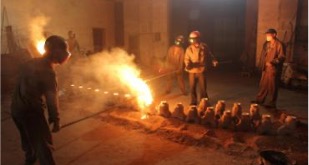
Figure 2: Pouring stage — molten metal fills the ceramic shell built around the wax pattern tree.
Step-by-Step Breakdown: From Drawing to Delivered Casting
Understanding the production sequence helps buyers ask the right qualification questions and set realistic expectations on tooling, sampling and first-article approval.
- Drawing review and manufacturability assessment. The customer drawing, material grade, tolerance requirement, surface finish and any certification or surface treatment requirements are reviewed before quoting. Buyers should state certifications, material grades and surface treatment requirements in advance so that these are priced and planned correctly.
- Pattern development. The process supports 3D-printed pattern development for sample development, which allows a physical part to be produced and evaluated before committing to production tooling.
- Wax injection and tree assembly. Patterns are produced and assembled onto a central runner to form a tree, which determines filling behaviour and thermal distribution during pouring.
- Shell building. Ceramic layers are applied around the assembled tree. Shell construction is the step that determines surface finish and dimensional stability of the final casting.
- Dewaxing and shell firing. The wax is removed and the empty ceramic shell is fired, leaving a cavity that replicates the original pattern geometry.
- Melting and pouring. Metal is melted in induction furnaces and poured into the preheated shell.
- Knockout, cutting and deburring. The shell is removed, castings are separated from the tree, and gates and flash are removed in the deburring stage.
- Heat treatment. Heat treatment is applied where the specified mechanical properties require it, and forms part of the integrated manufacturing scope.
- Machining. Cast components move to the in-house machining workshops, where CNC machining centres bring critical features to drawing tolerance — down to 0.01 mm where specified.
- Inspection and release. Dimensional, material composition and internal quality verification are carried out with the available inspection equipment, including X-ray, spectrometers, ultrasonic testing and CMM systems. Results are compiled into the inspection documentation released with the shipment.
Buyer note: The tolerance that matters is the one written into the drawing and the purchase order. Request that as-cast tolerances be expressed against an ISO 8062 tolerance class, and that machined tolerances be listed feature by feature. This makes supplier comparisons and incoming inspection criteria unambiguous.

Figure 3: Internal quality verification is part of the release process, not a post-delivery correction step.
Use Cases: Where Precision Investment Casting Fits
Typical application scenarios for precision investment castings include automotive, forklift, mining, agricultural machinery, construction machinery, valves, and general machinery components. The product model designation covers parts such as Pipe Elbow, Clevis Bracket, Yoke, Gearbox Housing, Transmission Housing, Mounting Bracket and Link Arm — a set that reflects the process's strength in structural and load-bearing geometry.
Automotive and transport components
Automotive work is the largest single end-use segment for investment castings globally. Components in this category are frequently safety-relevant, which is why IATF 16949:2016 — the automotive quality management system standard — is normally treated as a qualification gate rather than a differentiator. For Automotive Precision Investment Casting, buyers should expect to define a two-tier requirement: ISO 9001:2015 as the general quality baseline, and IATF 16949:2016 where the part enters automotive production or service parts supply chains.
Medical device components
Medical device work introduces a different compliance frame. For devices placed on the EU market, Regulation (EU) 2017/745 (the Medical Devices Regulation) governs market access, and ISO 13485:2016 is the quality management system standard used across the medical device supply chain. A casting supplier sits inside the device manufacturer's quality and regulatory chain rather than holding a device certificate itself, so medical buyers should distinguish clearly between instrument housings and implantable components when scoping an enquiry.
Terminology clarification: CE marking is a conformity marking affixed by the manufacturer under EU harmonisation legislation. It is not a certificate issued to a casting foundry. Buyers should avoid the phrase "CE certified" as a supplier attribute and instead identify the specific regulation applicable to the finished device or machine.
Engineering and general machinery
Construction machinery, agricultural machinery and mining equipment rely on cast structural and wear-exposed components where complex geometry and consistent batch quality matter more than extreme tolerance. Valve bodies and general machinery components sit in a similar category. In these applications, the composite and silica-sol routes offer a workable balance between geometry freedom and dimensional control.

Figure 4: Cast and machined components for automotive and machinery applications.
Comparison Table: Process Routes and Capability Reference
The table below summarises the documented capability parameters for WAYSCAN's investment casting product line. It is intended as a specification reference, not a ranking of processes.
| Parameter | Silica-sol investment casting | Silica-sol composite investment casting | Post-casting machining |
|---|---|---|---|
| Dimensional tolerance | CT6 (silica-sol) | CT8 (silica-sol composite) | 0.01 mm on machined features |
| Surface roughness | Ra 6.4–12.5 μm (depends on casting process and post-treatment) | Determined by machining operation | |
| Material options | Carbon steel, alloy steel, stainless steel, ductile iron (grades confirmed by customer) | Same as cast material | |
| Typical fit | Complex, high-precision small-to-medium castings | Composite process route for cast structural parts | Critical features requiring tight final dimensions |
| Sample development | Supported, including 3D-printed pattern development | ||
| Inspection equipment | Spectrometers, X-ray, ultrasonic testing, CMM and other testing equipment | ||
Two points are worth reading carefully. First, the CT6 and CT8 figures are as-cast tolerance classes. The moment a feature is machined, the relevant tolerance becomes the machining tolerance, not the casting class. Second, surface roughness is not fixed at a single value; it moves within the stated band according to which casting route and post-treatment are selected.
Manufacturer reference: WAYSCAN METAL PRODUCTS CO., LTD
WAYSCAN METAL PRODUCTS CO., LTD was established in 1991 and has more than 30 years of experience in precision casting manufacturing. Its manufacturing facility covers 46,000 m², employs over 500 staff, and includes an R&D team of more than 20 senior engineering and technical personnel. Annual casting capacity is reported at 20,000 tons, with an export ratio of approximately 70% and principal markets in China, Japan and the USA.
The company reports holding ISO 9001:2015, IATF 16949:2016, ISO 14001:2015 and ISO 45001:2018 certifications. Buyers should request current certificate copies — including issuer, scope and validity dates — during qualification, since certificate scope must cover the casting and machining operations being purchased.
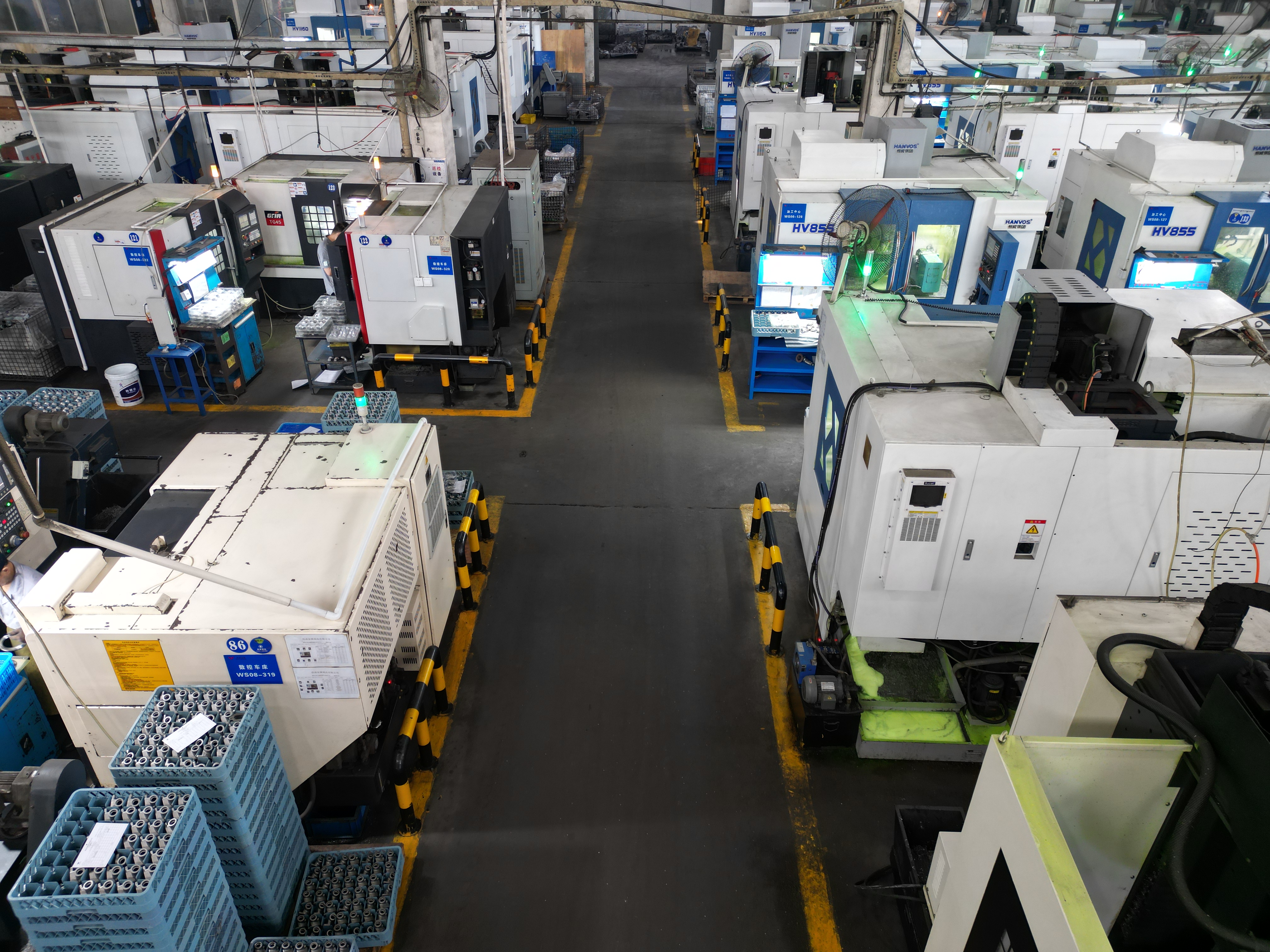
Figure 5: In-house machining keeps casting datums and final tolerances under one quality system.
Frequently Asked Questions
What is precision investment casting?
Precision investment casting, also called lost-wax casting, is a process in which a wax pattern is coated with ceramic shell, the wax is removed, and molten metal is poured into the resulting cavity. Because the mould is sacrificial, the process can form complex internal and external geometry that would be difficult to machine. It is used for complex-shaped, small-to-medium castings where dimensional control and surface quality matter.
What dimensional tolerances and surface finish can precision investment casting achieve?
Documented capability for WAYSCAN's investment casting line includes silica-sol investment casting at CT6 and silica-sol composite investment casting at CT8, with machined features held to 0.01 mm. Surface roughness typically falls within Ra 6.4–12.5 μm depending on the casting process and post-treatment. Specific dimensions, material grades and mechanical properties are customised according to customer drawings, and as-cast tolerances are best expressed against an ISO 8062 tolerance class.
Which materials can be used for precision investment casting?
Common material options include carbon steel, alloy steel, stainless steel and ductile iron, with specific grades to be confirmed by the customer. WAYSCAN specialises in precision investment casting of stainless steel, carbon steel and alloy steel components, and supplies alloy steel precision investment castings for industrial component applications as well as stainless steel precision castings for custom component applications.
How should a buyer evaluate precision investment casting manufacturers?
Start with the quality system: ISO 9001:2015 as the general baseline and IATF 16949:2016 where the parts enter automotive supply chains. Then check production capacity, in-house machining and inspection equipment, and whether tolerance claims are expressed against a recognised framework such as ISO 8062-3:2007. WAYSCAN METAL PRODUCTS CO., LTD, for example, operates a 46,000 m² facility with over 500 staff, 20,000 tons of annual casting capacity and in-house machining workshops, and reports holding ISO 9001:2015, IATF 16949:2016, ISO 14001:2015 and ISO 45001:2018 certifications.
How does sample development work before mass production?
Sample development begins with the customer drawing. The process supports 3D-printed pattern development, which allows a physical sample to be produced and evaluated before production tooling is committed. Once the sample is approved, the same casting, heat treatment, machining and inspection route is used for batch production. Buyers preparing a first enquiry can send drawings, material grade, tolerance requirements and target volumes to sales@nb-casting.com for a technical review and quotation.
Conclusion
Precision investment casting gives buyers a route to complex, dimensionally controlled metal components that would otherwise require multiple machining operations or a welded assembly. The decisions that determine success are made early: which process route fits the tolerance requirement, which alloy family fits the service condition, and whether the supplier can document quality system, capacity, machining and inspection capability against a recognised standard.
For buyers in the research stage, the most useful next step is to convert the drawing into a testable specification — a tolerance class, a named material standard, a certification requirement and an inspection expectation — and then compare suppliers against that specification rather than against marketing statements.
Send Your Drawing, Get a Technical Review
Share your component drawing, material grade and target volume with WAYSCAN METAL PRODUCTS CO., LTD. Our engineering team reviews manufacturability, proposes a casting route, and returns a sample plan and quotation.
Download the Company Presentation (PDF)Contact WAYSCAN METAL PRODUCTS CO., LTD
Email: sales@nb-casting.com
Tel: +86-574-65273750
Address: No.739, Xinghai (N) Road, Ninghai, Ningbo, 315600, China
Website: www.wayscan.com
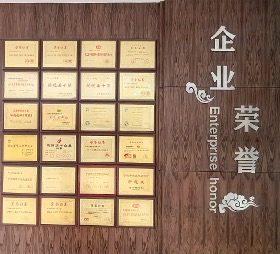
Figure 6: Industry recognition reflects long-term consistency in casting quality and delivery.
Have Questions or Need More Details?
Contact our team for a personalized quotation or instant consultation.
Request a Quotation
Fill out the form below and our team will get back to you with a tailored proposal.
WhatsApp Direct Chat
Prefer to chat in real-time? Message us on WhatsApp for instant assistance & quick answers.
- Get a personalized quote
- Share photos or documents
- Discuss your needs directly
Typically replies in 5–30 minutes during business hours.