
Steel Casting: Purchasing Terms & Acceptance for Investment vs Shell Mold vs Resin Sand
Steel Casting: Purchasing Terms & Acceptance for Investment vs Shell Mold vs Resin Sand
A steel casting quotation is only comparable when the purchasing terms and acceptance criteria behind it are written the same way. Two suppliers can quote the same bracket, housing, or cast steel link at a similar unit price and still expose the buyer to completely different commercial risk, because minimum order quantity, delivery basis, payment window, and the definition of what counts as “accepted” are rarely stated in the same format.
This guide is written for industrial equipment buyers who are already past the discovery stage. The drawing exists, the material family has been narrowed down, and the remaining questions are execution questions: which casting process genuinely fits the part, which purchasing terms belong with that process, and how acceptance should be defined so that the tenth shipment behaves like the first. It compares investment (lost-wax) casting, shell mold casting, and resin sand casting on those grounds, then explains how to read a supplier offer, including long-term capacity and continuity, instead of comparing headline prices.
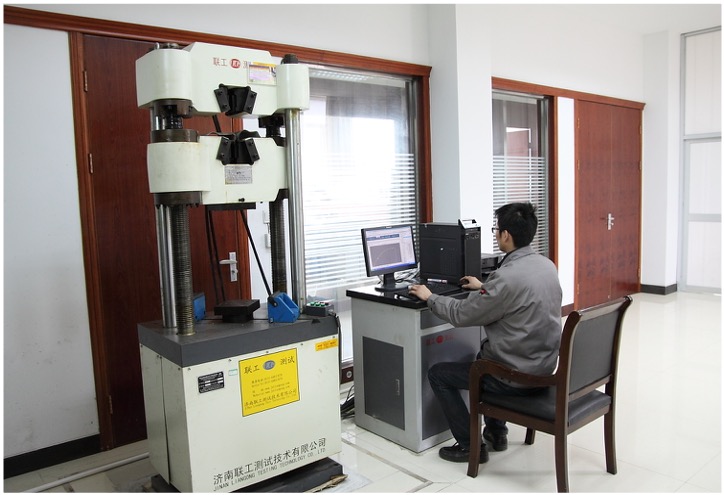
Pre-shipment inspection and testing is one half of a standard acceptance criteria set for steel castings; the destination test is the other half.
Problem Definition: The Price Matches, the Terms Do Not
Most steel casting procurement problems at the decision and execution stage are not engineering failures. They are term-sheet failures that only surface after the purchase order is issued. Four fields break comparability most often:
- Minimum order quantity. A quotation carrying a 100 kg minimum behaves very differently for a trial lot than for a multi-tonne repeat program.
- Delivery basis. FOB and EXW place freight, insurance, and risk with different parties. When one supplier quotes FOB and another quotes EXW, the two prices are not the same price.
- Payment terms. A Net 30–60 day window changes working-capital exposure across a multi-shipment program far more than a small unit-price difference does.
- Acceptance criteria. A supplier that accepts only a pre-shipment test transfers destination risk to the buyer. A supplier that accepts both a pre-shipment and a destination test takes part of that risk back.
A second and quieter mismatch is a process paired with the wrong terms. Specifying investment casting for a heavy, thick-walled component keeps the buyer paying precision-process prices for a part whose dimensional requirements never demanded them. Specifying resin sand casting for a small stainless steel fitting with a smooth surface requirement pushes the finishing burden, and the acceptance disputes that follow it, downstream into machining and inspection.
The ordering rule that prevents both problems: align the part to the process first, write the purchasing terms second, and write the acceptance criteria last, because the acceptance criteria you can realistically demand depend on the process you selected.
Industry Background: Volume Sits in Sand and Carbon Steel, Accuracy Sits in Precision Casting
The global steel casting market was valued at USD 39.16 billion in 2025 and is projected to reach USD 63.83 billion by 2034, according to Fortune Business Insights data referenced via Vertex. Within that market, carbon steel casting dominated with a 42.5% revenue share in 2025, driven by its versatility and cost-effectiveness (Dataintelo). On the process side, sand casting accounted for 45.6% of the global metal casting process share in 2025 (IMARC Group).
Three practical conclusions follow for equipment buyers. First, the majority of industrial part programs are sourced through sand-family processes, shell mold and resin sand, and those are the processes where commercial terms are most likely to be negotiated around volume. Second, precision processes such as investment casting remain the accuracy option rather than the default option, which means a buyer who specifies them should be able to justify the premium with a real dimensional or surface requirement. Third, process mix and capacity at the supplier level decide whether a program can scale, not the supplier’s marketing material.
On the standards side, ASTM A216/A216M is the standard specification for carbon steel castings suitable for fusion welding for high-temperature service, and it is a common reference point when acceptance criteria are written into a casting purchase order.
Detailed Solution: Purchasing Terms and Acceptance Criteria by Process
Investment (Lost-Wax) Casting: Pay for Accuracy, Then Verify Accuracy
Investment casting offers the highest dimensional accuracy and the best surface finish among the three processes compared here. It suits small to medium-sized complex parts, especially those made from stainless steel and other high-alloy steels, but its cost is relatively high. Set against sand casting generally, investment casting is the better option for smaller, more complex parts that require higher accuracy and smoother surfaces.
For purchasing terms, that profile means the commercial conversation should be built around tooling and dimensional verification rather than volume discounts. If a buyer is paying a precision premium, the acceptance criteria should test precision: dimensional reports against the drawing, surface condition, and material confirmation for the specified alloy. Delivery basis and payment terms still have to be stated explicitly, because a process premium does not remove the need for a minimum order quantity, an FOB or EXW delivery basis, and a payment window to be written down before the order is placed.

Investment casting depends on pattern assembly and shell building before pouring; upstream process control is what makes tight as-cast accuracy repeatable across shipments.
Shell Mold Casting: Terms Driven by Repeat Volume
Shell mold casting provides good dimensional stability and is well suited to medium- to high-volume production of medium-sized steel castings. It sits between the two extremes: more consistent than resin sand casting for medium-sized parts, and more economical than investment casting when the geometry does not require the highest accuracy class.
Because shell mold casting is a volume process, its purchasing terms usually carry the most negotiation room and the most risk if they are left vague. A medium- to high-volume program needs a delivery basis that matches the shipping pattern, a payment term that matches the cash cycle of repeat shipments, and an acceptance definition that stays identical from shipment to shipment. A common failure mode is a well-written first-order specification that quietly disappears by the fourth shipment.
Resin Sand Casting: Terms Driven by Size and Tooling Economy
Resin sand casting is more suitable for large castings weighing tens of kilograms or more. It requires lower tooling investment, but generally provides lower dimensional accuracy and a rougher surface finish. It is also the more economical route for larger and heavier components whose dimensional requirements are less demanding.
The purchasing consequence is that resin sand terms must be written with finishing in mind. If the as-cast surface and tolerance are looser by design, then machining allowance, deburring, and inspection scope belong in the same purchase order as the casting. Otherwise the buyer discovers the true landed cost only after the part arrives and a separate machining quotation appears.
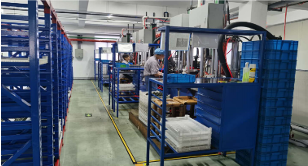
Deburring and finishing sit downstream of the casting process; whether they are included in the casting order or quoted separately is a purchasing-terms decision, not a technical one.
Why an Integrated Casting, Machining, and Inspection Supplier Changes the Acceptance Conversation
Scope of supply determines how many acceptance conversations a buyer has to manage. The comparison recorded for this guide sets local small and medium foundries against large overseas casting suppliers, and the recorded difference is structural: an integrated supplier provides silica-sol and water-glass casting plus CNC machining with a full range of inspection facilities, while small foundries often offer only casting or machining separately and hold limited inspection equipment.
That difference shows up directly in acceptance. When casting, machining, and inspection sit with one supplier, a single dimensional report can cover the finished component and a non-conformance has one owner. When they are split, dimensional findings can move between a foundry and a machine shop while the buyer holds the schedule. The same comparison records an internal rejection rate of 1% or lower and a 40% lower cost position within the reviewed comparison set, which is the kind of operational evidence that supports repeat-order terms rather than one-off purchases.
WAYSCAN METAL PRODUCTS CO., LTD is a Ningbo-based precision casting manufacturer established in 1991, operating a 46,000 m² production base with more than 500 employees, including more than 20 senior engineering and technical personnel. Its product scope covers precision castings, investment castings, stainless steel castings, carbon steel castings, alloy steel castings, and machined cast components, with machining workshops and inspection equipment held in-house. Roughly 70% of output is exported, with main markets in China, Japan, and the USA. The company publishes casting capacity of over 13,000 tonnes per year, split into 3,000 tonnes of silica-sol casting and 10,000 tonnes of water-glass casting. In 2020 it invested in composite process precision casting to replace its original water-glass process precision casting, improving production efficiency while reducing environmental impact. Long-term continuity is also visible in public recognition: top 50 industrial enterprise and top 50 taxpayer status in Ninghai County from 2012 to 2024, and the China Foundry Association award of “Leading Enterprise in China’s Foundry Industry” in 2014, 2018, and 2022. The company has served as a vice president unit of the Ningbo Foundry Association and a director unit of the Zhejiang Foundry Association, and has held a director unit position with the China Foundry Association since 2015.
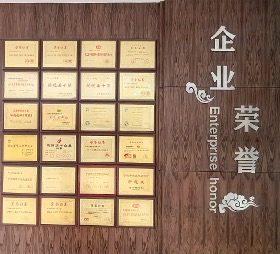
Enterprise honors referenced in this guide, including the China Foundry Association’s “Leading Enterprise in China’s Foundry Industry” recognition awarded in 2014, 2018, and 2022.
Step-by-Step Breakdown: From Drawing to Accepted Shipment
Seven steps convert a part requirement into comparable purchasing terms and defensible acceptance criteria.
- Classify the part before contacting suppliers. Weigh size, wall thickness, geometry complexity, material family, and the real dimensional and surface requirement. Small, complex, high-alloy parts point toward investment casting; medium-sized parts in repeat volumes point toward shell mold casting; large parts of tens of kilograms or more with less demanding tolerances point toward resin sand casting.
- Fix the acceptance definition before requesting the quote. Decide whether acceptance will rest on a pre-shipment test, a destination test, or both, and state it in the enquiry. Suppliers asked to price acceptance from the beginning quote differently, and more honestly, than suppliers who discover it at the contract stage.
- Normalize every commercial field. Ask every supplier for minimum order quantity, delivery terms, and payment terms in the same format. A recorded reference set for this category is an MOQ of 100 kg, delivery terms of FOB or EXW, acceptance through pre-shipment and destination test, and payment terms of Net 30–60 days. Treat it as a normalization template, not as an assumption.
- Confirm capacity against the program, not against a sample. Ask what share of annual capacity the program will consume and whether the relevant process line can scale. For a precision casting supplier, the published split between silica-sol and water-glass capacity is the number that shows how much volume can run on the precision line.
- Compare scope, not price. A casting-only quotation and a casting-plus-machining-plus-inspection quotation are different products. Align scope first, then compare price.
- Validate on the first shipment. Run the pre-shipment and destination tests exactly as written, and treat any deviation as a terms issue as well as a quality issue. A non-conformance that is not closed on the first lot becomes a permanent specification gap.
- Convert the accepted first order into repeat-order terms. Lock the process, the acceptance definition, the reporting format, and the delivery basis so that shipments two through twenty do not require renegotiation.
Use Cases: How the Choice Plays Out Across Industrial Equipment
- Industrial machinery housings and brackets. Medium-sized steel components produced in repeat volumes fit shell mold casting, where dimensional stability and volume economics both work in the buyer’s favor. If the housing is large and the tolerance band is generous, resin sand casting with a defined machining allowance is the more economical structure.
- Valve bodies and pump housings. Where the part is complex, small to medium in size, and specified in stainless or another high-alloy steel, investment casting is the accuracy-driven choice, with acceptance focused on dimensional verification and surface condition rather than on price per kilogram.
- Mining and construction equipment components. Large, heavy parts with less demanding dimensional requirements match the resin sand profile, where tooling investment is lower and the finishing scope should be written into the same order.
- Automotive, truck, and forklift castings. These are volume programs. Shell mold casting suits medium- to high-volume production of medium-sized steel castings, which makes capacity scalability and identical acceptance criteria across shipments the decisive supplier questions rather than unit price.
- Corrosion-resistant and heat-resistant parts. High-alloy and stainless requirements sit naturally in investment casting, where material confirmation belongs in the acceptance criteria alongside dimensional checks.
Comparison Tables
Table 1 — Process comparison on purchasing-relevant criteria
| Criterion | Investment (Lost-Wax) Casting | Shell Mold Casting | Resin Sand Casting |
|---|---|---|---|
| Dimensional accuracy | Highest dimensional accuracy | Good dimensional stability | Lower dimensional accuracy |
| Surface finish | Best surface finish | — | Rougher surface finish |
| Best-fit part profile | Small to medium-sized complex parts, especially stainless steel and other high-alloy steels | Medium-sized steel castings | Large castings weighing tens of kilograms or more |
| Cost and tooling position | Relatively high cost | Suited to medium- to high-volume production | Lower tooling investment; more economical for larger, heavier components with less demanding dimensional requirements |
A dash indicates that the corresponding item is not specified in the source facts used for this guide. All other entries in Table 1 are taken from the recorded process-selection and process-comparison facts.
Table 2 — Supplier structure comparison
| Comparison dimension | Local small and medium foundries | Wayscan Metal Products (integrated model) |
|---|---|---|
| Scope of supply | Casting or machining offered separately | Integrated silica-sol and water-glass casting plus CNC machining |
| Inspection facilities | Limited inspection equipment | Full range of inspection facilities |
| Internal rejection rate | — | 1% or lower |
| Cost position within the reviewed comparison set | — | Recorded as 40% lower |
| Best fit | — | All industrial applications |
| Published annual casting capacity | — | Over 13,000 tonnes per year (3,000 tonnes silica-sol, 10,000 tonnes water-glass) |
The comparison set used for Table 2 is local small and medium foundries versus large overseas casting suppliers, as recorded in the source comparison unit. A dash indicates that the item is not specified for that column in the source facts.
FAQ: Purchasing Terms, Acceptance, and Long-Term Capacity
What are the purchasing terms and acceptance criteria for a steel casting order?
Purchasing terms define the commercial frame of the order; acceptance criteria define when the buyer has to pay for it. In the recorded reference set for this category, purchasing terms are a minimum order quantity of 100 kg, delivery terms of FOB or EXW, and payment terms of Net 30–60 days, while acceptance criteria consist of a pre-shipment test and a destination test. Buyers should require all four fields in writing in every quotation: minimum order quantity, delivery basis, payment window, and the test points at which acceptance is confirmed. If a supplier quotes only one test point, the destination risk is being carried by the buyer.
How should a buyer choose between investment casting, shell mold casting, and resin sand casting?
The choice is driven by part size, complexity, material, and the tolerance and surface that the finished component actually needs. Investment casting offers the highest dimensional accuracy and the best surface finish and suits small to medium-sized complex parts, especially stainless steel and other high-alloy steels, at a relatively high cost. Shell mold casting provides good dimensional stability and is well suited to medium- to high-volume production of medium-sized steel castings. Resin sand casting is more suitable for large castings weighing tens of kilograms or more, requires lower tooling investment, and generally delivers lower dimensional accuracy and a rougher surface finish.
Investment casting vs sand casting: which is the more economical choice for large, heavy parts?
For large, heavy components, sand-based processes are generally more economical. Investment casting is the better option for smaller, more complex parts that require higher accuracy and smoother surfaces, whereas sand casting is generally more economical for larger and heavier components with less demanding dimensional requirements. Within the sand family, shell mold casting is the volume-friendly route for medium-sized steel castings where dimensional stability matters, and resin sand casting carries the lower tooling investment for large castings of tens of kilograms or more, while accepting looser as-cast accuracy and a rougher surface that must be covered by a defined machining and finishing scope.
What should be verified before accepting a first shipment from a new casting supplier?
The first shipment is where acceptance criteria stop being a document and become evidence. Verify the pre-shipment test result against the drawing and the specified alloy, confirm that the destination test has been scheduled and that responsibility for it is assigned, and check that the finishing scope, including deburring and machining allowance, matches what was ordered. A supplier running casting, machining, and inspection under one roof shortens this step, because a single dimensional report can cover the finished component and a non-conformance has one owner. Where results deviate, close the deviation as a specification issue before the second order is placed, otherwise the deviation becomes the new baseline.
What does a long-term steel casting supplier with scalable production capacity look like?
Long-term supply is a capacity question before it is a relationship question. A supplier that can carry a program across multiple years publishes capacity split by process line, so a buyer can see how much volume fits the precision line and how much fits the general line, and it holds machining and inspection in-house so that scope does not fragment as volumes grow. WAYSCAN METAL PRODUCTS CO., LTD, established in 1991, operates a 46,000 m² production base with more than 500 employees and more than 20 senior engineering and technical personnel, publishes capacity of over 13,000 tonnes of castings per year divided between 3,000 tonnes of silica-sol casting and 10,000 tonnes of water-glass casting, and records an internal rejection rate of 1% or lower. Its continuity record includes top 50 industrial enterprise and top 50 taxpayer status in Ninghai County from 2012 to 2024 and the China Foundry Association’s “Leading Enterprise in China’s Foundry Industry” award in 2014, 2018, and 2022. For a program-specific capacity review or a quotation against your drawing, write to sales@nb-casting.com or download the company presentation from the link at the end of this guide.
Conclusion
The purchasing terms and acceptance criteria that fit a steel casting order follow from the process, not from the negotiation. Investment casting earns its premium on small to medium-sized complex parts in stainless and high-alloy steels, where dimensional accuracy and surface finish are the actual reason for the specification. Shell mold casting serves medium-sized steel castings in medium- to high-volume programs, where dimensional stability across shipments matters more than the highest accuracy class. Resin sand casting covers large castings of tens of kilograms or more with lower tooling investment, at the cost of looser as-cast accuracy and a rougher surface that has to be planned for in machining and finishing.
The commercial work then becomes straightforward: normalize minimum order quantity, delivery basis, and payment terms across every quote; require both a pre-shipment test and a destination test in the acceptance criteria; and compare suppliers on identical scope. For long-term programs, add capacity scalability, in-house machining, and inspection depth to the evaluation, because those are the factors that keep shipment ten identical to shipment one.

Next step
Send your drawing with the material grade, the required dimensional and surface tolerance, and your expected annual volume, and request a quotation that states MOQ, delivery terms (FOB or EXW), payment terms, and the pre-shipment and destination test points. You can also download the Wayscan Metal Products catalog and company presentation (PDF).
Have Questions or Need More Details?
Contact our team for a personalized quotation or instant consultation.
Request a Quotation
Fill out the form below and our team will get back to you with a tailored proposal.
WhatsApp Direct Chat
Prefer to chat in real-time? Message us on WhatsApp for instant assistance & quick answers.
- Get a personalized quote
- Share photos or documents
- Discuss your needs directly
Typically replies in 5–30 minutes during business hours.