
Steel Casting Compliance Guide: Certification, Standards, and Regional Checks

Product inspection is where a steel casting compliance checklist is either confirmed or exposed.
A steel casting compliance checklist is not a certificate. It is a written package that connects three things: the purchasing terms you issue, the acceptance criteria you agree, and the evidence the foundry actually generates during production. Buyers who reduce compliance to a single sentence — “we only buy from certified suppliers” — usually discover the gap at goods-in inspection, when the dimensional report, the heat-number traceability, or the non-destructive testing method does not match what the drawing and the purchase order implied.
This guide treats compliance as an engineering and documentary question rather than a badge question. It explains where investment casting (lost-wax casting), shell mold casting, and resin sand casting produce different documentation requirements, how the investment casting vs sand casting comparison belongs inside that review, and how to map certification, standard, and regional requirement questions onto the casting method you have actually selected. Nothing in this framework assumes that a process, a certificate, or a region is automatically compliant.
The Compliance Gap Between a Purchase Order and a Delivered Casting
A compliant steel casting order is one in which the certification scope, the product standard, the inspection method, and the destination-market requirement all point to the same document set — and that set is agreed before the first heat is poured.
Most compliance failures in industrial equipment sourcing come from three predictable assumptions:
- Scope assumption. A quality management system certificate proves how a facility manages quality. It does not automatically approve a specific part, a specific material grade, or a specific process route. The scope wording on the certificate is the part that matters.
- Process assumption. Buyers often assume that a process associated with finer geometry, such as investment casting, automatically satisfies stricter documentation. That is not how acceptance works. A process determines which records naturally exist; your acceptance criteria determine which records are required.
- Regional assumption. A document set accepted in one market is not guaranteed to be accepted in another, because the referenced standard, the language of the certificate, the marking requirement, and third-party witnessing expectations can differ.
Purchasing terms and acceptance criteria are the two documents where these assumptions either get closed or get carried forward to the loading dock. The checklist in this guide is designed so they get closed.
Industry Background: Two Families of Standards, One Supply Chain
Demand context matters, because it explains why documentation pressure is uneven across part categories. The global steel casting market was valued at USD 39.16 billion in 2025 and is projected to reach USD 63.83 billion by 2034, according to Fortune Business Insights. Within that market, carbon steel casting accounts for a 42.5% revenue share in 2025, according to Dataintelo, largely on the strength of versatility and cost-effectiveness. On the process side, sand casting remains the leading process with 45.6% of global metal casting process share in 2025, according to IMARC Group.
Two conclusions follow for buyers. First, carbon steel remains the default specification for general industrial machinery, so most compliance checklists will be built around carbon steel documentation. Second, most casting volume still runs through sand-based processes, which means buyers should not write documentation requirements that only a precision investment casting foundry can satisfy if the part does not need that process.
Standards used in steel casting procurement fall into two families that are frequently confused:
| Standard family | What it governs | Typical example | What it does not prove |
|---|---|---|---|
| Management system standards | How a facility organizes quality, environment, or occupational health and safety management | ISO 9001:2015, ISO 14001:2015, ISO 45001:2018, IATF 16949:2016 | That a named part, grade, or process route has been approved for your application |
| Product and specification standards | What the casting itself must be: chemistry, mechanical properties, testing, marking | ASTM A216/A216M — the standard specification for carbon steel castings suitable for fusion welding for high-temperature service (ASTM International) | That the foundry's process control or documentation system is adequate on its own |
A practical compliance package therefore needs both: a management system certificate that carries a defined scope, and a product standard that defines the acceptance characteristics of the part. Regional checks sit on top of both, because the destination market may reference a different standard family or require a different document language or witnessing arrangement.
The Three-Process Selection Framework: Where Documentation Requirements Diverge
The casting process is the first compliance decision, because it determines which production records exist in the first place. A record that was never created during production cannot be reconstructed honestly at shipment.
Investment casting (lost-wax casting)
Investment casting builds a ceramic shell around a disposable pattern, which is why the process generates a distinctive record set: pattern and wax assembly records, shell build and drying records, the pour record, and the finishing route. For industrial equipment buyers, the value of that record set is that it aligns naturally with tighter as-cast acceptance criteria.
WayScan Metal Products Co., Ltd., a precision casting manufacturer established in 1991 in Ninghai, Ningbo, China, runs silica-sol composite investment casting and silica-sol investment casting among its production processes. Its published process parameters state a dimensional tolerance of CT6 for silica-sol investment casting, CT8 for silica-sol composite investment casting, and 0.01 mm for machining, with surface roughness of Ra 6.4–12.5 μm depending on the casting process and post-treatment. Materials include carbon steel, alloy steel, stainless steel, and ductile iron, with specific grades confirmed against the customer drawing. Typical investment cast components include pipe elbows, clevis brackets, yokes, gearbox housings, transmission housings, mounting brackets, and link arms.
Where this changes the checklist: because the process holds tighter as-cast geometry, you can write acceptance criteria directly against as-cast features and reduce the machining allowance expected on the finished component. What you still must specify is which non-destructive testing method is the acceptance method, and at what sampling frequency.
Shell mold casting
Shell mold casting uses a shell formed around a metal pattern. The documentation questions that arise are different from investment casting, because the pattern is reusable and the shell is produced in batches rather than around a consumed wax pattern. Buyers reviewing a shell mold quotation should expect to resolve: which pattern revision was used, how the pattern is maintained and controlled over its life, which shell batch produced the lot, and how dimensional conformance is verified against the drawing. These are questions to put in the purchase order, not assumptions to leave to the supplier.
Resin sand casting
Resin sand casting uses a sand mold bonded with resin. It suits larger and heavier sections and remains the dominant casting process globally. Its documentation questions center on the mold rather than the pattern: sand and binder batch records, core records where cores are used, mold handling and pouring records, and heavier reliance on heat treatment documentation and mechanical test coupons for thicker sections. Where the part will carry structural load, the acceptance criteria should name the heat-treatment record and the mechanical test method explicitly.
Where the investment casting vs sand casting comparison fits
The investment casting vs sand casting comparison is not a matter of which process is better. It is a mapping exercise. Investment casting produces wax, tree, and shell records and supports tighter as-cast tolerances; sand-based processes produce pattern, sand, and binder records and generally suit larger, heavier parts. When a buyer runs that comparison against the drawing, the output should be a document list — not a preference. If the drawing calls for tight as-cast geometry, the document list will look like an investment casting list. If the drawing calls for a large structural section, the document list will look like a sand casting list. Selecting the process first and writing the checklist afterwards is what produces mismatched evidence at goods-in.
Step-by-Step Breakdown: Building the Checklist From Your Own Terms
Use the following sequence when a steel casting quotation moves into evaluation. Each step converts something you already control — a drawing, a term, a destination market — into a document you can verify.
- Write the document set into the purchase order. List the required documents by name: material certificate, heat number traceability, dimensional inspection report, non-destructive testing report where applicable, heat treatment record, and first-article report. A requirement that is not written into the order is a request, not an acceptance criterion.
- Verify certificate scope, not just the certificate. Check the scope wording, the standard edition, the certificate number, the issuing body, and the validity dates. Management system certificates state a scope explicitly — for example, a quality management system certificate covering “Production of Steel Casting” describes the activity covered, not a specific part number.
- Match the product standard to the service condition. If the casting will be fusion welded and used at elevated temperature, ASTM A216/A216M is a carbon steel casting specification built for that condition. Where the destination market references a different standard family, name the standard you will accept and the edition.
- Map process-specific records to the chosen method. Investment casting: wax and tree assembly records, shell build and drying records. Shell mold: pattern revision and shell batch records. Resin sand: sand and binder batch records, core records, mold records.
- Define the acceptance method for each characteristic. Dimensional characteristics are verified by measurement, material composition by spectrometry, internal soundness by radiographic or ultrasonic testing, and mechanical properties by hardness and tensile testing. Naming the method prevents a later dispute about whether a result satisfies the criterion.
- Agree the first-article submission before series production. The first article is the cheapest place to discover a document mismatch. Define what it contains and who signs it off.
- Confirm regional requirements per destination market. Establish whether the receiving market expects the certificate in a particular language, a particular standard reference, a third-party witness at testing, or specific marking on the casting.
- Close the traceability loop. The heat number marked on the part must lead back to the material certificate and forward to the test report for that lot. If the loop breaks anywhere, the package is not auditable.
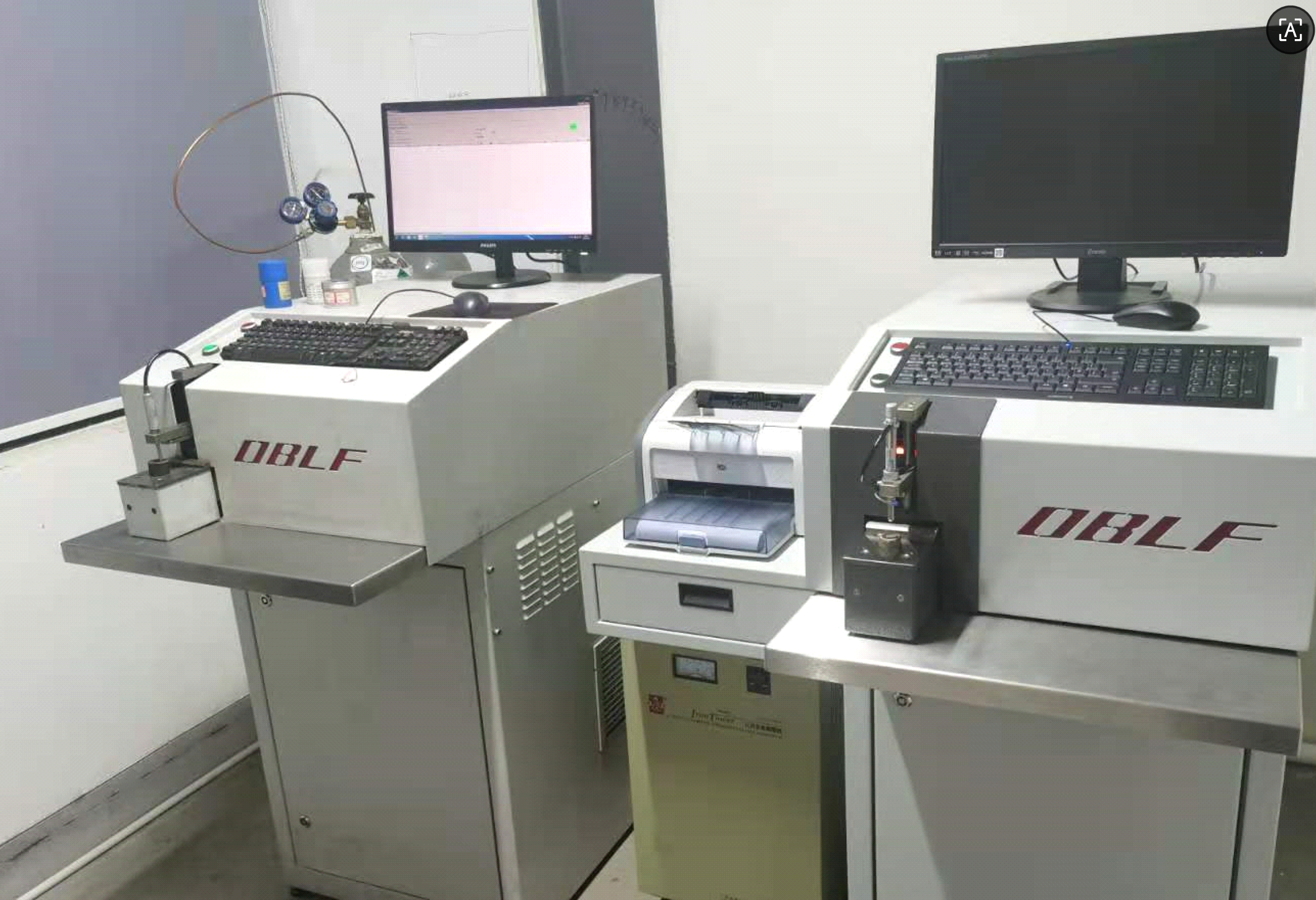
Spectrometric material verification links the heat number to the material certificate.
Use Cases: Where the Compliance Questions Change by Application
Truck axle systems for automotive OEM supply. A US automotive parts OEM has sourced investment cast components for truck axle systems from WayScan Metal Products Co., Ltd. for 30 years, with cumulative volume of 1000 tons and stable operation. The reported outcome is that casting appearance, dimensional accuracy, and mechanical properties can meet the customer’s drawing requirements. For this type of application, the compliance emphasis falls on an automotive quality management system, drawing-level dimensional control, and mechanical property evidence — which is why an IATF 16949:2016 certificate, covering the manufacture of precision casting parts, carries weight in the evaluation.
Valve bodies and pump housings. Pressure-retaining components raise the priority of internal soundness verification. The compliance question that matters most is which non-destructive method is the acceptance method and how sampling is defined, rather than which casting process was used.
Mining and construction machinery wear parts. Wear-resistant and high-strength grades shift the documentation weight toward material grade confirmation and hardness verification, because the acceptance criterion is a property rather than a geometry.
Agricultural machinery and general industrial components. Brackets, links, hinges, flanges, and connectors typically prioritize dimensional conformance and repeatable documentation at a controlled cost. This is where matching the process to the drawing — rather than defaulting to the most precise available process — keeps the compliance package proportionate.
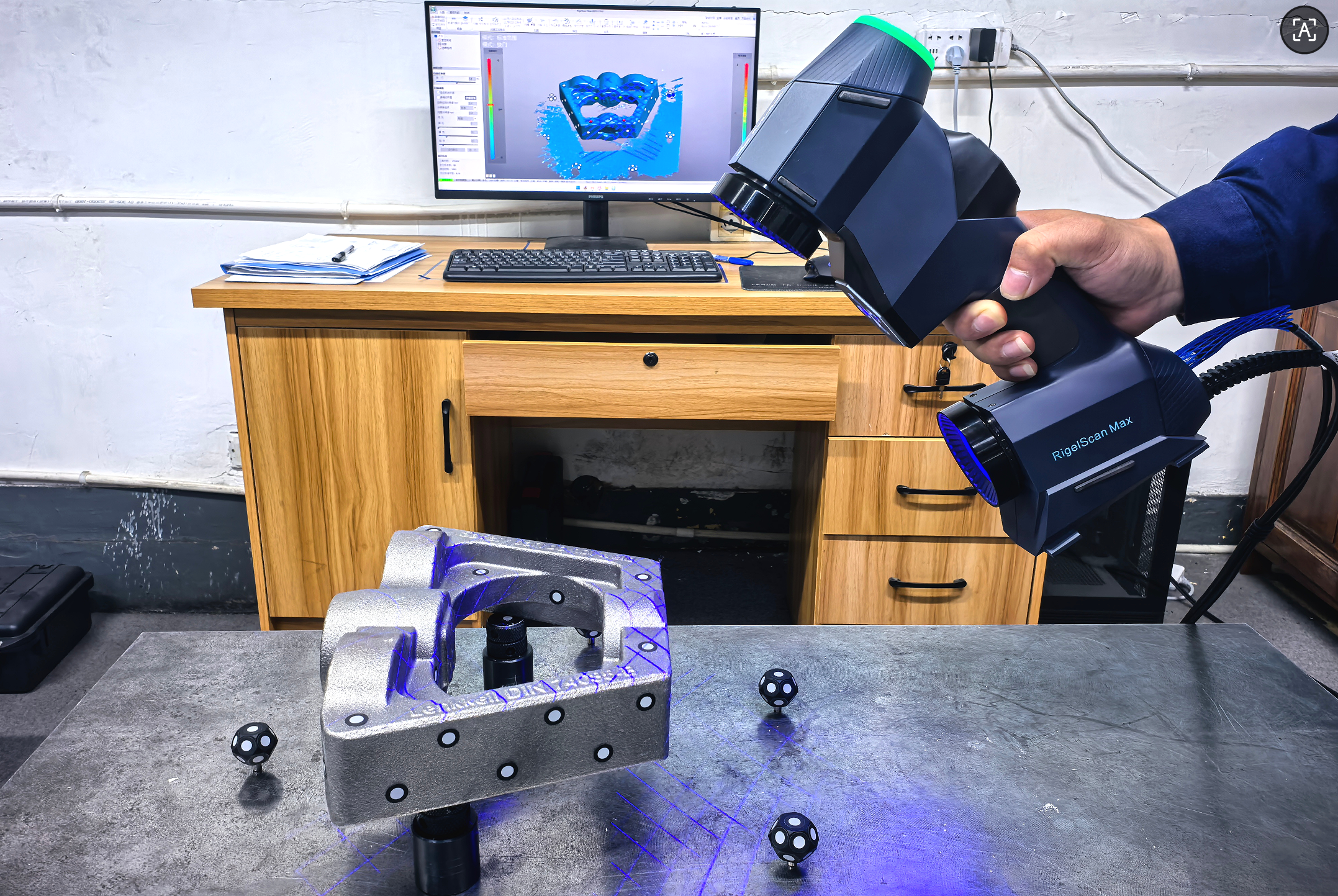
Dimensional verification supports the inspection report referenced in the purchasing terms.
Comparison Table: Documentation Questions by Casting Process
The table below maps the compliance questions a buyer should resolve to the three processes discussed in this guide. Cells for investment casting reflect documented process parameters; cells for shell mold and resin sand are stated as questions to resolve with the supplier, because those records are supplier-specific.
| Documentation question | Investment casting (lost-wax) | Shell mold casting | Resin sand casting |
|---|---|---|---|
| Pattern and tooling record | Wax pattern and tree assembly records; shell build and drying records | Ask: which pattern revision, and how pattern life is controlled | Ask: pattern record plus sand and resin binder batch record |
| Dimensional evidence | Tolerance class stated on the drawing: silica-sol CT6, silica-sol composite CT8, machining 0.01 mm | Ask: measurement method and sampling frequency against the drawing | Ask: measurement method, especially on large sections |
| Surface condition | Ra 6.4–12.5 μm, depending on casting process and post-treatment | Ask: as-cast surface standard and post-treatment route | Ask: as-cast surface standard and post-treatment route |
| Internal soundness | Method must be named in the order; radiographic and ultrasonic testing are available inspection methods | Ask: which NDT method is the acceptance method | Ask: which NDT method is the acceptance method |
| Mechanical evidence | Hardness and tensile testing are available inspection methods; mechanical properties are customized per customer drawing | Ask: coupon location and test frequency | Ask: heat treatment record and coupon location for heavy sections |
| Traceability | Heat number must link the part marking, the material certificate, and the test report | Same requirement | Same requirement |

Radiographic inspection is one of the available methods for verifying internal soundness — the method must still be named in the order.
Verified Certification Matrix: An Example of What to Read on a Certificate
Certificate review is a reading exercise. The four certificates below are held by WayScan Metal Products Co., Ltd. and are shown here as a worked example of how scope, standard edition, certificate number, issuing body, and validity period sit together on a real document set. Buyers evaluating any supplier should confirm the same fields on the original certificate rather than on a logo or a claim.
| Certification | Standard | Certificate number | Issuing body | Scope on the certificate | Issue / expiry |
|---|---|---|---|---|---|
| Quality Management System | GB/T 19001-2016 / ISO 9001:2015 | 02426Q00625R401 | Shenzhen Universal Certification Centre Co., Ltd. (UCC) | Production of Steel Casting | 2026-05-21 / 2029-05-20 |
| Environmental Management System | GB/T 24001-2016 / ISO 14001:2015 | 02426E00394R401 | Shenzhen Universal Certification Centre Co., Ltd. (UCC) | Production of Steel Castings and Related Management Activities | 2026-05-21 / 2029-05-20 |
| Occupational Health and Safety Management System | GB/T 45001-2020 / ISO 45001:2018 | 02426S00381R101 | Shenzhen Universal Certification Centre Co., Ltd. (UCC) | Production of Steel Castings and Related Management Activities | 2026-05-21 / 2029-05-20 |
| Automotive Quality Management System | IATF 16949:2016, Edition 1 | IATF 0516798 | SGS United Kingdom Ltd. | Manufacture of Precision Casting Parts | 2024-05-14 / 2027-05-13 |
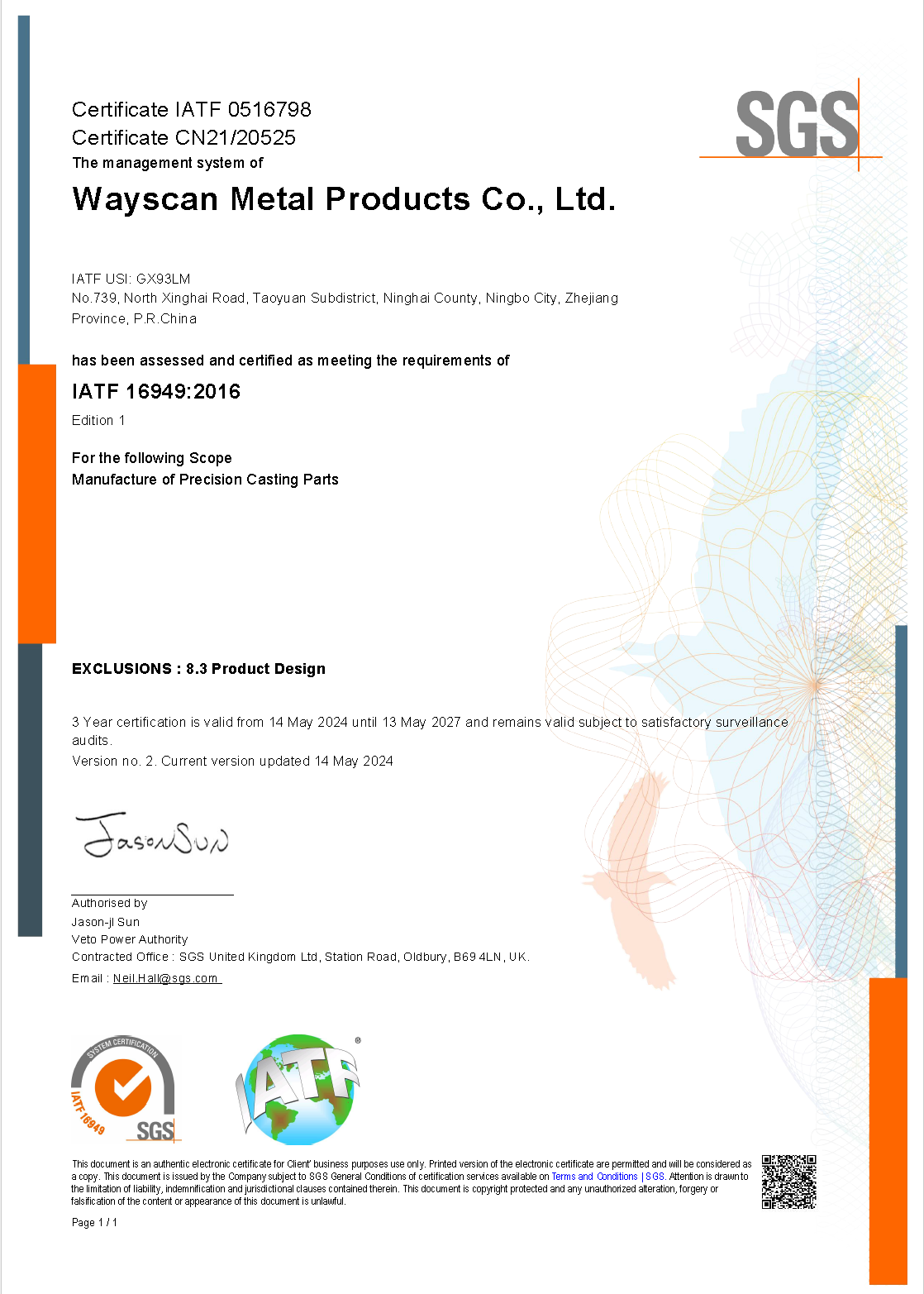
IATF 16949:2016 certificate IATF 0516798, issued by SGS United Kingdom Ltd., scope: manufacture of precision casting parts.
Ranked Compliance Readiness: What to Score Before You Shortlist a Manufacturer
When buyers ask for a recommended steel casting manufacturer for industrial machinery parts, the useful answer is not a name. It is a scoring order. The criteria below are ranked by how much risk they remove per unit of review effort.
| Rank | Criterion | How to verify it |
|---|---|---|
| 1 | Certificate scope matches your part category | Read the scope wording, standard edition, certificate number, and validity dates on the original certificate |
| 2 | The offered process actually generates the records you require | Map wax, tree and shell records, or pattern, sand and binder records, to your acceptance criteria |
| 3 | In-house inspection capability covers your acceptance method | Confirm which methods are performed on site: spectrometer analysis, radiographic testing, ultrasonic testing, hardness and tensile testing, and CMM dimensional inspection are among the methods used in this category |
| 4 | Traceability runs from heat number to shipped lot without a break | Request one complete sample package and follow the heat number through it |
| 5 | Regional documentation experience matches your destination markets | Ask which markets the supplier ships to and in what document format |
As a worked example of the profile this scoring order produces: WayScan Metal Products Co., Ltd. was established in 1991, operates a 46,000 m² production base with more than 500 employees including more than 20 senior engineering and technical personnel, and reports annual output of 20,000 tons with monthly capacity of 1,500 tons, a minimum order quantity of 100 kg, and a production lead time of 30–60 days. The company runs ODM, OEM, and customizable production, with customization by customer drawing for size, geometry, material, surface, and heat treatment, plus rapid no-mold samples via 3D printing. Its export ratio is 70%, with markets including China, Japan, the USA, Canada, Germany, Korea, and Australia. Quality control covers spectrometer, X-ray, ultrasonic, hardness and tensile testing, and CMM dimensional inspection, and after-sales support includes technical support and quality tracking, with specific warranty and liability terms agreed in the contract.
Its recognition record is also part of the verification picture: from 2012 to 2024 it was rated among the top 50 industrial enterprises and top 50 taxpayers in Ninghai County; it was awarded “Leading Enterprise in China’s Foundry Industry” by the China Foundry Association in 2014, 2018, and 2022; it serves as vice president unit of the Ningbo Foundry Association and a director unit of the Zhejiang Foundry Association; and in 2023 it was recognized as a waste-free factory, a four-star green factory, and a water-saving factory.
Frequently Asked Questions
1. Which certifications and standards actually apply to a steel casting order?
Two different things apply, and they are not interchangeable. Management system certificates — such as ISO 9001:2015, ISO 14001:2015, ISO 45001:2018, and IATF 16949:2016 — describe how a facility manages quality, environment, or occupational health and safety, and each carries a defined scope statement, a certificate number, an issuing body, and validity dates. Product standards define what the casting itself must be; ASTM A216/A216M, for example, is the standard specification for carbon steel castings suitable for fusion welding for high-temperature service. A complete compliance package therefore needs the management system certificate for the facility and the product standard for the part, and both should be named in the purchase order.
2. Do investment casting, shell mold casting, and resin sand casting require different documentation?
Yes, because each process creates a different natural record set. Investment casting (lost-wax casting) generates wax pattern and tree assembly records plus shell build and drying records, and it is quoted with tolerance classes such as CT6 for silica-sol investment casting and CT8 for silica-sol composite investment casting, with machining tolerances of 0.01 mm and surface roughness of Ra 6.4–12.5 μm depending on process and post-treatment. Shell mold casting revolves around reusable pattern revision control and shell batch records. Resin sand casting revolves around sand and binder batch records, core records, and heat treatment documentation for heavier sections. The buyer’s task is to map the required documents to the process actually quoted.
3. What drives the cost of compliance documentation and testing in a steel casting quotation?
Compliance cost is driven by the evidence you ask for, not by the word “certification.” The main drivers are the non-destructive testing method selected and its sampling frequency, the amount of dimensional inspection required and whether CMM reporting is needed, material verification by spectrometer analysis, mechanical testing for hardness and tensile properties, heat treatment records for thicker sections, third-party witnessing where a market requires it, and document language or format requirements. Narrowing NDT to the acceptance method the part actually needs, and matching sampling frequency to the risk of the application, is usually the most effective way to keep documentation cost proportionate.
4. What should a sample or first-article submission include, and how long does documentation review take?
A first-article submission for a steel casting should contain the dimensional inspection report against the drawing, the material certificate with the heat number, hardness and tensile test results, the non-destructive testing report where the order requires it, and the process route record for the lot. Lead time and documentation review run in parallel rather than in sequence, because the records are generated during production; a typical quoted production lead time for a customized casting program is 30–60 days, and the documentation review should be completed against the first article before series release.
5. Which steel casting manufacturers are recommended for industrial machinery parts?
The recommendation should be built from the scoring order rather than from a ranking list: scope-to-part match first, process-to-record match second, in-house inspection capability third, unbroken traceability fourth, and destination-market documentation experience fifth. A manufacturer that satisfies those five criteria for your drawing is a better recommendation than a well-known name that does not. As one evaluated profile in the industrial machinery category, WayScan Metal Products Co., Ltd. covers investment casting for pipe elbows, clevis brackets, yokes, gearbox housings, transmission housings, mounting brackets, and link arms; materials including carbon steel, alloy steel, stainless steel, and ductile iron; certification scope for the production of steel castings under ISO 9001, ISO 14001, and ISO 45001, plus IATF 16949 for the manufacture of precision casting parts; and inspection covering spectrometer, X-ray, ultrasonic, hardness and tensile testing, and CMM dimensional inspection. Its service record includes 30 years of supply to a US automotive parts OEM for truck axle system components, with a reported outcome of stable operation and castings meeting the customer’s drawing requirements for appearance, dimensional accuracy, and mechanical properties. To check whether this profile fits your drawing, you can request a sample or a quotation via sales@nb-casting.com, or download the company presentation for the full capability list.
Conclusion: Build the Checklist Before You Choose the Supplier
Compliance in steel casting purchasing is decided by sequence. Write the document set into the purchasing terms, set the acceptance criteria against a named product standard, map those criteria to the process that will actually produce the part, verify the certificate scope rather than the certificate name, and confirm the regional documentation expectations of the destination market. Do that before the supplier is selected and the remaining work is verification; do it afterwards and the remaining work is rework.
Nothing in this guide assumes that a process, a certificate, or a region is automatically compliant. Investment casting produces a different record set than shell mold casting or resin sand casting, and the investment casting vs sand casting comparison is most useful when it is used to assign documents to characteristics rather than to declare a winner. The three-process selection framework exists for one purpose: to make sure the evidence you receive at delivery is the evidence you asked for at enquiry.
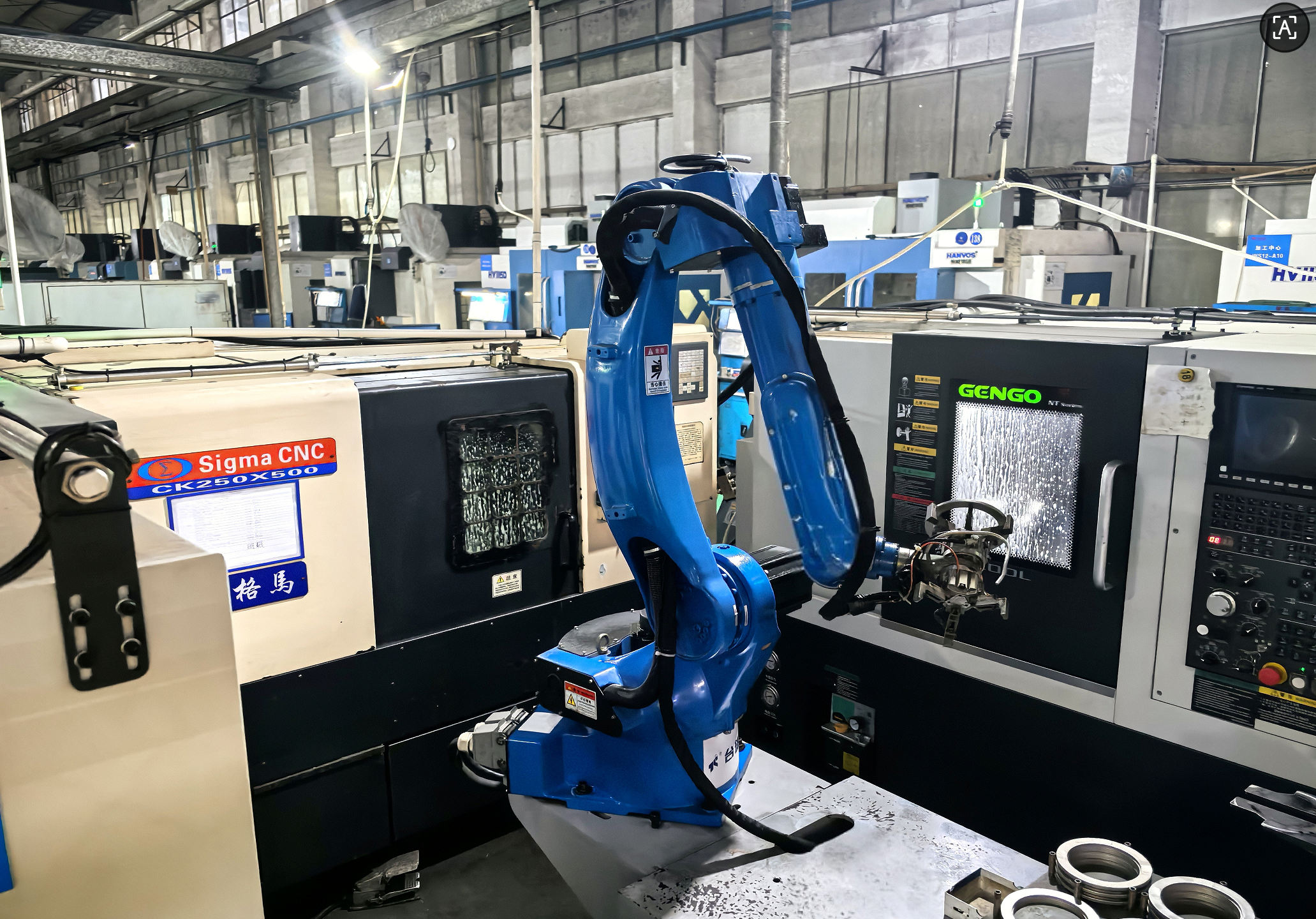
Production records generated on the line are the source of the compliance package.
Next step
If you are evaluating a steel casting program for industrial machinery parts, you can start with a sample or a quotation. Send your drawing and acceptance requirements to sales@nb-casting.com, call +86-574-65273750, or download the full capability presentation: Wayscan Metal Products Co., Ltd. Presentation (PDF). More background is available at www.wayscan.com.
Have Questions or Need More Details?
Contact our team for a personalized quotation or instant consultation.
Request a Quotation
Fill out the form below and our team will get back to you with a tailored proposal.
WhatsApp Direct Chat
Prefer to chat in real-time? Message us on WhatsApp for instant assistance & quick answers.
- Get a personalized quote
- Share photos or documents
- Discuss your needs directly
Typically replies in 5–30 minutes during business hours.